
The ROI you can't put on a spreadsheet
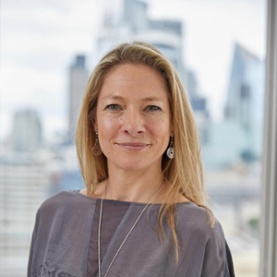
I came to the WBS Executive MBA (London) with a career behind me that most people would consider unconventional preparation for business school. I'd spent years as a national radio presenter, then led campaigns for major brands including Coca-Cola, Ford and Duracell, and built an instinct for audiences, storytelling and what actually makes people pay attention. What I didn't have was the formal business architecture to match that instinct. The MBA was the bridge.
Walking into Warwick felt bold, and occasionally absurd. I was used to being the person who made complex things sound simple in my work over the years. Suddenly I was the one in the room who didn't immediately speak the language. Deep finance and accounting, operations, quantitative analysis. These weren't my natural habitat. But what I discovered quickly was that the skills I'd built in radio, reading an audience, distilling an idea to its sharpest point, holding attention in a crowded space, were not a disadvantage. They were an unexpected edge. My cohort could build a financial model. I could make the findings land. That diversity made for some great teams. That set the tone for how I approached the whole programme.
My goals going in were clear enough. I wanted strategic credibility. I wanted to understand the inner workings of business from the inside, not just the outside looking in. And I wanted the confidence to make a bigger move. What I didn't expect was how much the programme would change the way I see myself, not just what I do.
The rigour of WBS built on the business knowledge I'd developed leading teams, and took it somewhere I couldn't have reached alone. I'd always been good at reading a room, reading an audience, reading a brief. The MBA taught me to read a business. Strategy stopped being a word people threw around in meetings and became a set of tools I actually used. The modules on leadership and organisational behaviour were the ones that stuck deepest. I'd led teams. I'd managed talent. But I'd never had the language or the frameworks to properly interrogate why some cultures thrive and others quietly decay.
Since graduating, I've founded Sense & Scale Marketing, a consultancy focused on helping founders and business leaders build authority and visibility which drives business growth. The MBA is directly threaded through everything I do. But it goes deeper than that. Before WBS, I could help a client look credible. After WBS, I could help them understand why credibility matters commercially, how it compounds over time, and what it actually costs a business when its leaders stay invisible.
The MBA gave me a strategic framework to wrap around instincts I'd always had. I could diagnose what a business actually needed rather than what it thought it wanted. I could price my expertise properly, position my offer clearly, and build a consultancy that was genuinely differentiated rather than just another marketing service. Sense & Scale would not exist in the form it does without WBS, I'm certain of that.
I also sit on the Board of the RSPCA South London as a Trustee. That might sound like a leap from broadcaster to boardroom, but the MBA made it a natural one. Governance, accountability, holding strategic complexity while staying connected to purpose. These are skills the programme develops deliberately. Contributing to decisions that affect one of the UK's most significant animal welfare organisations, I draw on WBS constantly. The ability to interrogate data, challenge assumptions respectfully and think about long term organisational health rather than short term noise. It's the MBA in practice, just in a very different room. And running alongside all of it is a sustainability lens I can't switch off.
The MBA introduced me to the systemic pressures facing business at a global level. Once you see them, you can't unsee them. It deepened my commitment to purpose-led work and led me to pursue further sustainability qualifications at both Warwick and Cambridge. It is one of the most unexpected and lasting gifts the programme gave me.
The network is something people mention a lot when they talk about business school. It’s one of the strongest reasons to do an MBA at Warwick. The WBS network doesn't feel transactional. It feels like a genuine community of people who take each other seriously, help when needed, and challenge my thinking on a constant basis - the learning goes on.
What surprised me most? How personal it all turned out to be. I expected intellectual stretch. I got that. I did not expect the programme to fundamentally change how I make decisions, how I show up, and how much I trust my own point of view. That, in the end, is the real return on investment. Not the credential. The person I became, and the choices I felt able to make afterwards.
 X
X Facebook
 LinkedIn
 YouTube
 Instagram
 Tiktok