Making a Difference Through SSLC
Kosuke Kamada, third-year Management student at WBS, reflects on his SSLC journey and how student voices create real change at WBS.



In her latest blog, undergraduate student Liya Ma explores the rich history and personal traditions of the Chinese Lunar New Year, while reflecting on her experience celebrating it as an international student.
Chinese Lunar New Year, also called Chinese Spring Festival, falls on the first day of the Chinese calendar. The origins of the festival can be traced back to ancient times, when people hold rituals at the beginning of the year to pray for favourable weather and abundant harvests in the coming year. Over time, these rituals gradually evolved into celebrations, eventually becoming the Chinese Spring Festival that we recognise today. The process of celebrating called as “guonian” in Chinese, meaning crossing the year. Thus, for many Chinese people, the spring festival is more than a public holiday, but a time for family reunions, symbolizing the beginning of a new year filled with good luck and happiness. Today, the influence of Chinese Spring Festival extends far beyond China. In many countries and regions around the world, people celebrate it in different ways. In recent years, the Chinese Spring Festival has been officially recognized by UNESCO as part of the humanity’s intangible culture heritage.
Preparations for the festival begin weeks in advance. Streets are decorated with hanging lanterns, and people start preparing by buying presents, decorations, food, and new clothes for the new year. One important tradition during this period is “Spring Cleaning”, where families thoroughly clean their houses to sweep away bad luck from the past year. After cleaning, decorations are put up on windows and doors. These decorations are mostly red, as red is believed to represent good luck and happiness. Some families also write their own Spring couplets with auspicious phrases. These usually appear in pairs and are placed on either side of the door, and the character “福” (fu, meaning blessing or good fortune) displayed in the centre to express wishes for the new year.
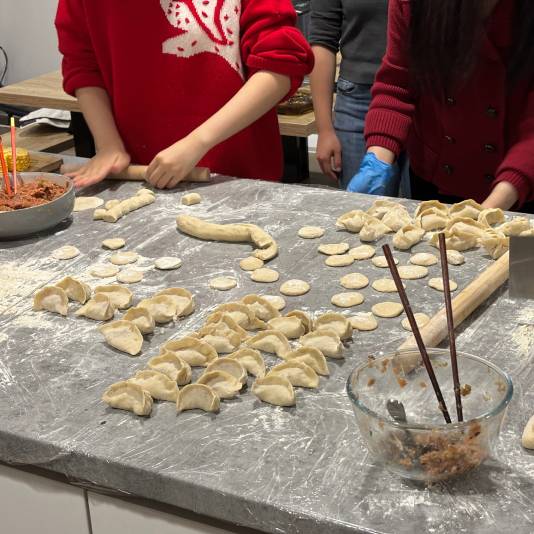
On New Year’s Eve, the reunion dinner is the most important part of the celebration. The dishes often carry symbolic meanings: fish represents prosperity, while dumplings symbolise wealth, as their shape looks similar like ancient silver and gold ingot. There is also a small tradition where a coin is placed inside one of the dumplings, and whoever finds it will have good fortune throughout the coming year. After dinner, children receive red envelopes filled with lucky money from elders, conveying blessings and good wishes. On this day, families often stay together until midnight, enjoying snacks, chatting, and watching the Spring Festival Gala on television. As the clock strikes twelve, fireworks are set off to welcome the new year, which is also my favourite part of the celebration. During the Spring Festival, people also visit relatives and friends to exchange New Year greetings.
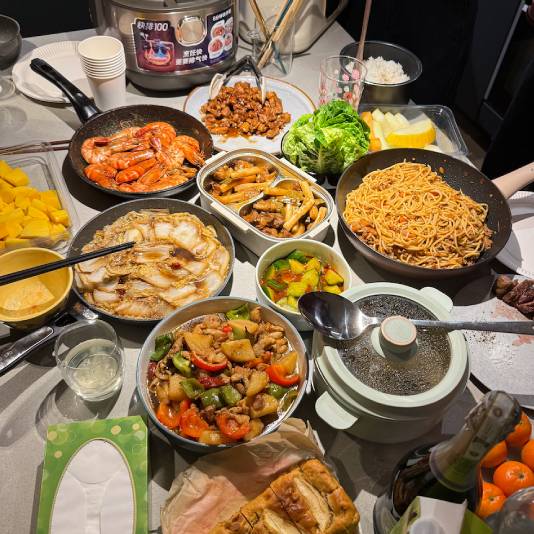
As an international student studying in the UK, I now celebrate the Spring Festival with friends from different countries. Before the New Year, I clean my room and decorate my door with Spring couplets, bringing a familiar New Year atmosphere into my student accommodation. On New Year's Eve, I invite friends over for reunion dinner. Everyone brings dishes from their own countries and regions, and we make dumplings together with different fillings. After dinner, we exchange New Year gifts, watch movies, and spend the evening together. I also take part in celebrations on campus. At the New Year Gala organised by ChiSoc, I performed traditional Chinese dance with my friends as part of the Warwick Chinese Dance Team. Through these performances, we celebrate the Spring Festival with the wider university community.
Kosuke Kamada, third-year Management student at WBS, reflects on his SSLC journey and how student voices create real change at WBS.
Looking for some inspiration for your next study session? Undergraduate student Ashley shares his favourite study spots.
 X
X Facebook
 LinkedIn
 YouTube
 Instagram
 Tiktok