


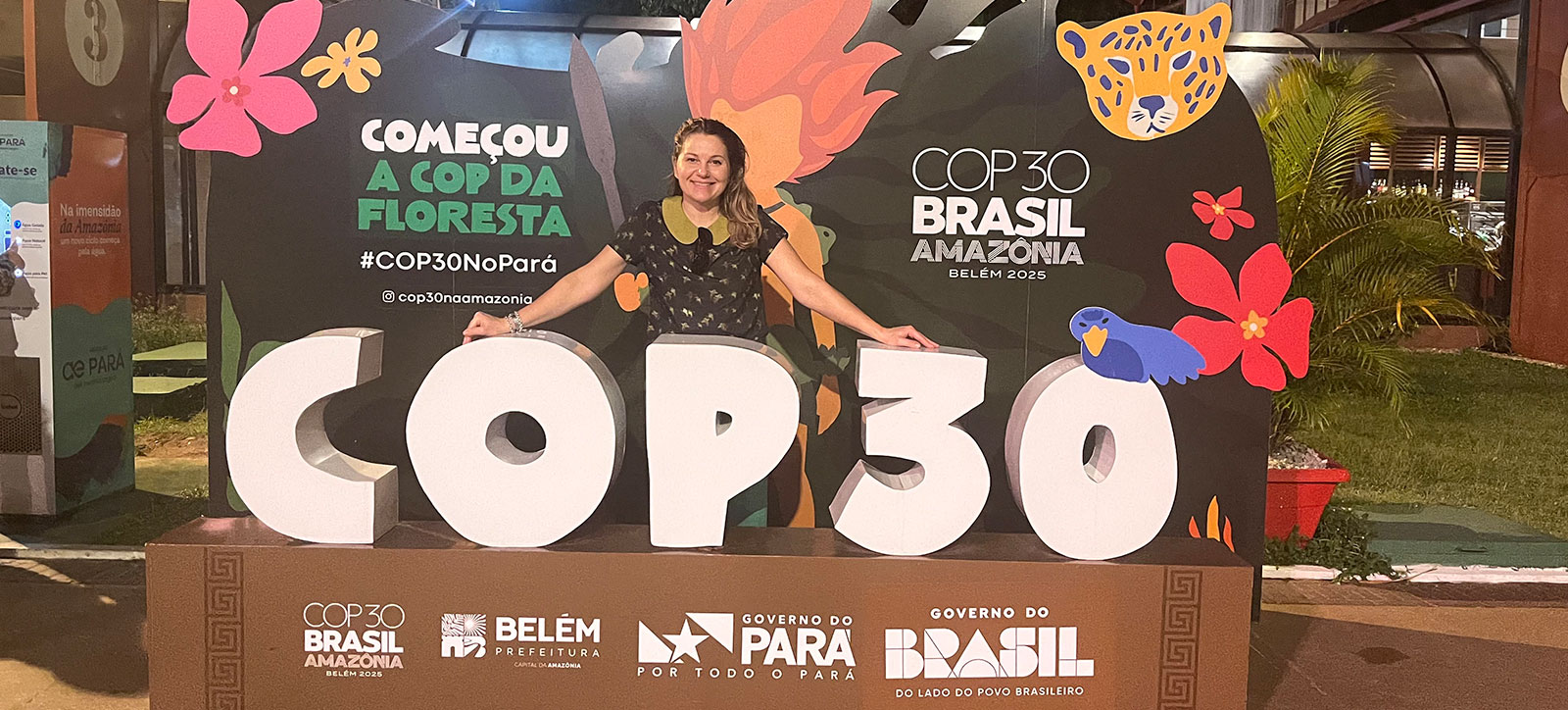
Amazon delivery: Michelle Sartorio, founder of regenerative beauty firm Auê Natural Ltd, at COP30
COP30 took place amid growing scepticism in whether negotiations between politicians will be sufficient to deliver the change we need.
What stood out at this year’s conference in Belém, Brazil, was not the final text that resulted from those negotiations and failed to deliver a road map for transitioning away from fossil fuels.
Instead, it was the evidence on display of the circular economy in action.
In the Amazon rainforest, I spoke with extractive communities which rely on local resources, suppliers, and researchers working in the bioeconomy (which uses renewable resources such as plants and microorganisms).
In the COP pavilions, I exchanged views with investors, youth activists, and policymakers.
Across these different environments, one message was clear: the transition is already happening. Not because diplomacy delivered it, but because markets, young consumers and innovators are forcing it forward.
Brazilians have an expression called ‘mutirão’ to describe a collective mobilisation, where each person contributes what they can towards a shared goal.
That is exactly what a transition of this scale will require – a continuous, co-ordinated effort across companies, investors, consumers, and suppliers around the globe.
So, what does this mean for consumer goods, retail, and the beauty industry? And what should leaders – both corporate and financial – prioritise now?
Sustainability won't wait for COP consensus
The final COP30 outcome did not include an explicit fossil-fuel phase-out roadmap, mirroring earlier deadlocks such as the plastics treaty negotiations in Geneva (during the second part of the fifth session of the Intergovernmental Negotiating Committee on the UN Environmental programme, commonly referred to as INC-5.2).
Yet Brazil’s presidency broke with diplomatic tradition by taking the lead in two independent global roadmaps: one to a fossil-fuel-free economy, and one to halt and reverse deforestation.
More importantly, the data and case studies circulating at COP30 showed the transition is accelerating irrespective of political consensus.
Clean-energy investment has reached $2 trillion per year: India reached its renewable targets five years early; solar is now Pakistan’s largest power source; and multiple African nations are scaling solar capacity at record speed.
For managers, this means one thing: the transition will continue, with or without diplomacy. Markets, supply chains and consumer expectations are already shifting.
What COP30 means for consumer goods businesses
This has several important implications for businesses in the consumer goods and beauty sector.
- Implementation risk is now strategic risk: The absence of a formal fossil-fuel agreement does not slow transition, it shifts it to supply chains and trade rules. The European Union’s Carbon Border Adjustment Mechanism (2026) will put a real price on carbon-intensive inputs, forcing companies to rethink packaging, transport and materials. A supply chain built on high-carbon inputs risks becoming a stranded value chain.
- Climate and public health are converging: At COP30, the World Health Organization's (WHO) Brazil framework was widely discussed because it reframed climate action through a public-health lens. For consumer goods and beauty, this is critical: almost half of consumers report reactions to potent synthetic actives, microplastics have been found in placentas, and only 12 per cent can identify harmful ingredients on labels. Regulators cannot ignore these signals.
- Gen Z and Alpha are reshaping demand: Gen Z (those born between the mid-1990s to 2010s) and Gen Alpha (2010s onwards) are the most eco-conscious and digitally savvy generations so far. They expect ingredient safety, transparency, genuine brand purpose and environmental responsibility and they quickly detect inauthenticity. Yet they are also bombarded with misinformation and aggressive online marketing. Brands that educate, simplify and provide evidence will gain trust.
Making the beauty industry more sustainable
Beauty is not peripheral to climate transition; it is a microcosm of it. In the UK alone, beauty contributed £30.4 billion to GDP in 2024, making it a strategic sector for the country that touches nearly every household.
The industry's environmental footprint is large. The global beauty sector produces around 30 per cent of the world’s plastic waste, with packaging accounting for 70 per cent of that.
An estimated 120 billion units of plastic beauty packaging are discarded each year globally, with only nine per cent being recycled. In addition to this, 87 per cent of mainstream cosmetics contain microplastics that persist in ecosystems.
The damage is not confined to the environment. The youth health burden is rising, with dermatologists reporting more irritation and skin barrier damage among teenagers, driven by the rise of influencers whose beauty routines are promoted by social media algorithms.
This is hardly surprising, given that many Gen Alpha pre-teens spend more than three hours a day consuming unverified beauty content and children as young as eight years-old are adopting adult beauty regimes in an attempt to emulate their favourite influencers.
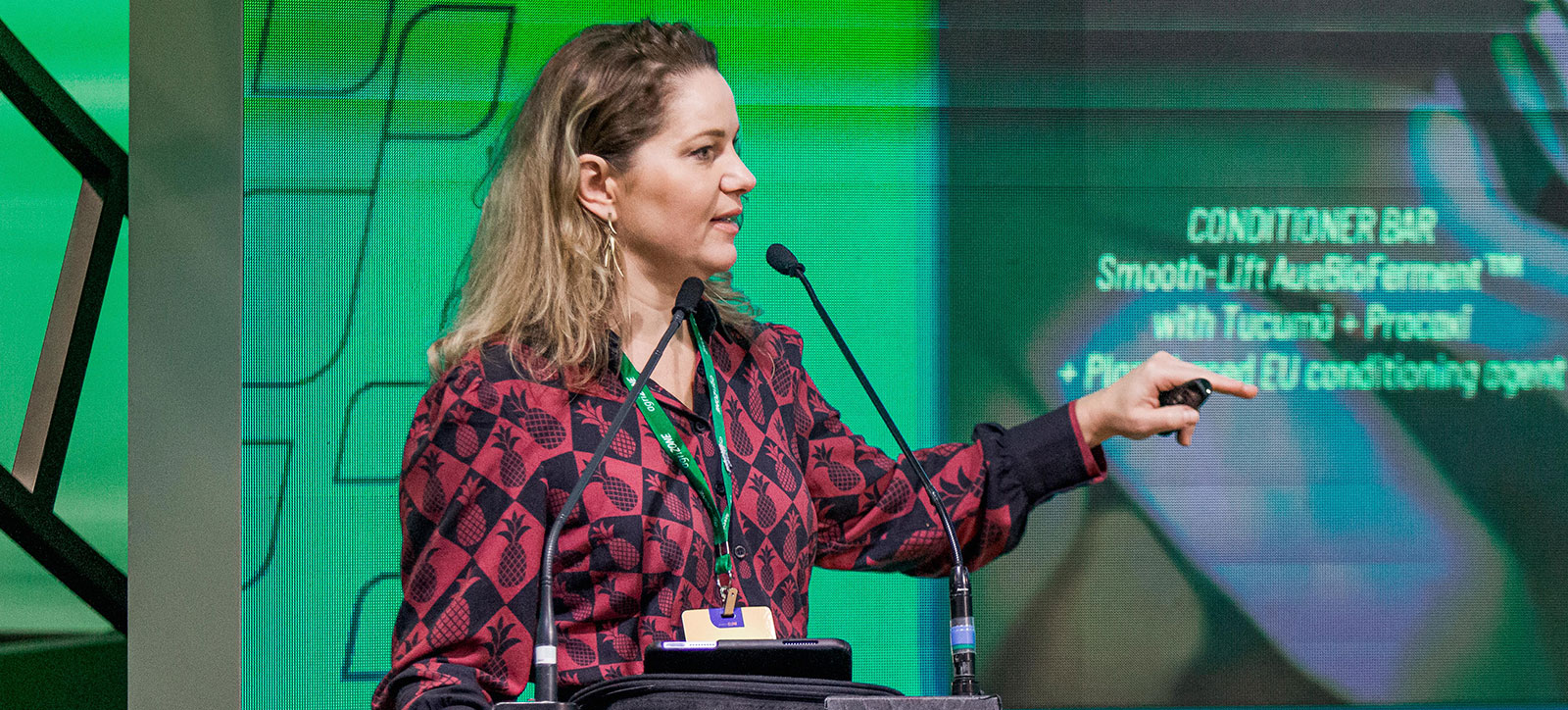
And yet, beauty is also where some of the most promising regenerative innovation is emerging. In the state of Pará in northern Brazil, I watched communities harvest açaí, andiroba, cupuaçu and buriti using standing-forest methods that preserve biodiversity while generating income. These ingredients are biodegradable, clinically effective and already form the backbone of a growing bioeconomy.
The Brazilian bioactive ingredients market is projected to reach $6.74 billion by 2030, still only a fraction of what is possible given how little of the region’s high-performance plant botanicals are understood or commercially explored. This is where new models can shift the narrative.
Brands like Auê Natural - which I founded to combine European biotech with regenerative Amazonian sourcing - show how beauty can move from extractive practices to becoming a vehicle for conservation, community wellbeing and science-led innovation.
This is the blueprint for a regenerative future: products that are better for people, better for the planet, and better for the communities who steward our ecosystems, responsibly.
COP30: Five practical takeaways for managers
1 Use free standardised tools to assess climate risk
The SME Climate Hub – a collaboration between the UK Government and businesses that aims to empower smaller firms to take action – provides free emissions measurement, reporting and reduction planning.
It is one of the simplest ways to create consistent Scope 1 to 3 datasets across suppliers.
2 Treat clean energy as a cost strategy
Renewable energy is now the lowest-cost option in many regions. Transitioning logistics, manufacturing and procurement to cleaner power lowers both emissions and operational expense.
3 Improve circularity through open standards
Redesign packaging using publicly available recyclability standards. Reducing material (paper and ink) variety and simplifying labelling often yields immediate gains.
4 Build resilience through nature-positive sourcing
Forest-based co-operatives offer transparent data and regenerative value chains. Working with them strengthens traceability and supply-chain resilience.
5 Empower young consumers with facts not noise
Use evidence-based resources from UNESCO, WHO and academic institutions to help Gen Z and Alpha navigate misinformation, while supporting safer, science-backed choices.
Why companies should not ignore climate risks
Drawing on my experience in asset management, consulting and entrepreneurship, one message is clear: transition pays off.
For companies, integrating climate and health into product design, sourcing, and communication reduces long-term risk and builds modern relevance.
Firms that ignore this, risk stranded value chains with shrinking markets. Those that make the transition see commercial benefits: Unilever reports its Sustainable Living brands grow 30 per cent faster than its wider portfolio.
For investors, this means supporting innovators solving real environmental and health problems - not retrofitting narratives onto legacy models. They need to encourage smaller portfolio companies to adopt frameworks like the SME Climate Hub to establish comparable, decision-ready climate data. Also, investors should persuade firms to strengthen boards with climate and consumer-literate expertise. And direct capital towards nature-positive supply chains and resilient infrastructure.
No company, investor or consumer can drive this shift alone, but together, through small and large contributions, sectors can mobilise at scale.
COP30 confirmed that the energy, materials and consumer transitions will not wait for diplomacy. They are already unfolding in supply chains, markets and forests. For managers and investors, the opportunity now is to move from intention to fast implementation.
Regenerative value creation is not branding, it is a strategic choice that strengthens resilience, competitiveness and consumer trust. The organisations that act now will define the next decade of value - for people, for markets and for the planet.
Further reading:
Six lessons for sustainable start-ups seeking investment
Can business save the planet again?
Involving marginalised communities in sustainability initiatives
How sustainable is your chocolate advent calendar?
Michelle Sartorio is Founder and CEO of Auê Natural Ltd, an impact-centred and regenerative beauty company launching across the UK and Europe in 2026.
Michelle holds a Full-time MBA from Warwick Business School and is an alum of the Institute of Sustainability Leadership at Cambridge University. She is a member of the WBS Sustainability Steering Group and was invited to speak at the COP30 AgriZone Pavilion in Brazil.
She also works as a fractional consultant, helping mid-sized companies reposition their brands and strategies through authentic sustainability and evidence-led storytelling. Connect with Michelle on LinkedIn.
Discover more on Business and Sustainability. Receive our Core Insights newsletter via email or LinkedIn.
 X
X Facebook
 LinkedIn
 YouTube
 Instagram
 Tiktok