


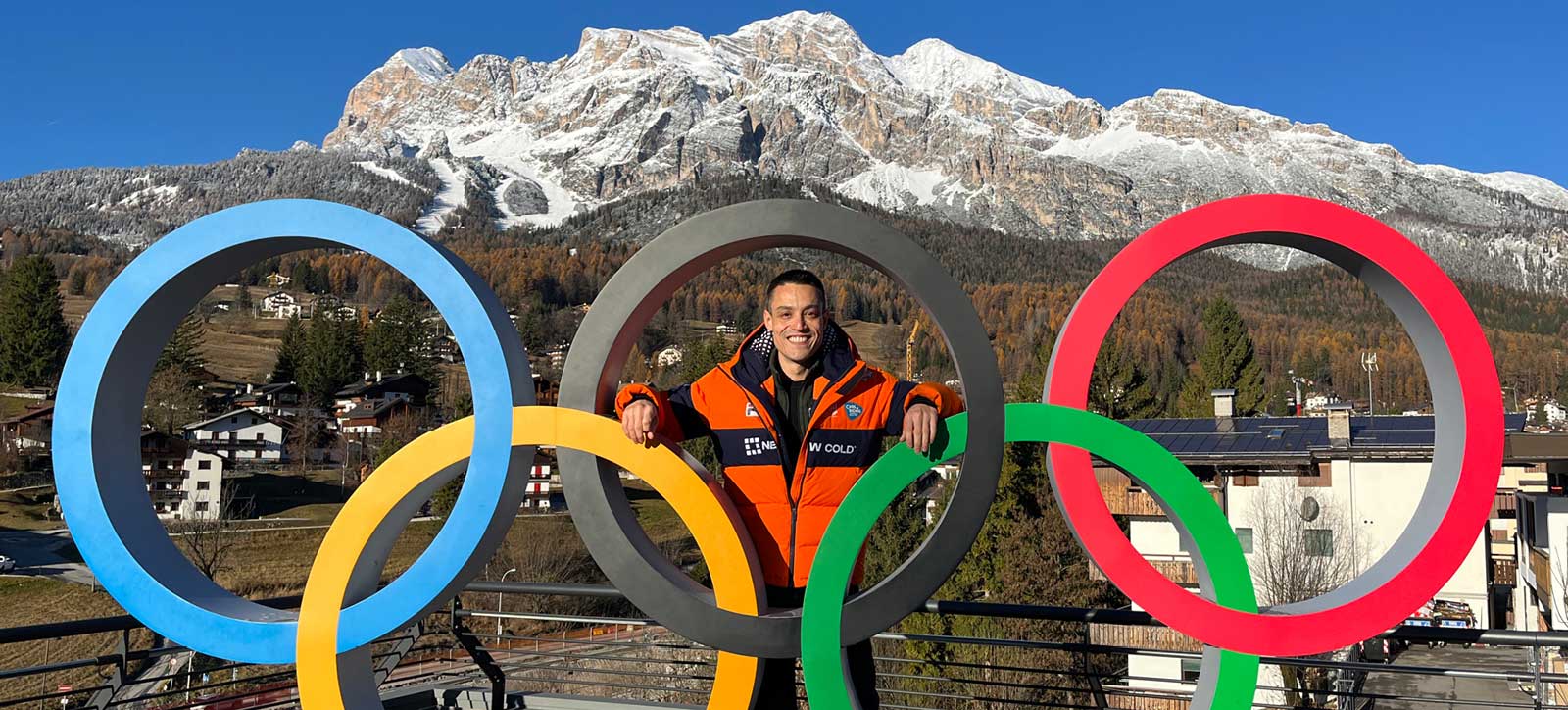
Chasing excellence: From elite sport to the C-suite, Paul Postema draws on his WBS MBA to elevate the performance of athletes and business executives alike
From policing the streets of The Hague to coaching athletes for the Winter Olympics, Paul Postema’s career has been shaped by high-pressure environments. For many, the leap from police officer to Olympic performance coach might seem unlikely. For Paul, it was a logical evolution.
After four years in the Dutch police and a subsequent role in the ambulance services, Paul moved into HR consulting while simultaneously building a career in elite sport. He coached field hockey teams across Europe — including national teams and Olympic athletes — before increasingly specialising in the mental side of performance.
Today, he works at the intersection of business and elite sport, coaching executives and Olympic athletes alike, including the Dutch National Bobsleigh and Skeleton team as they prepare for the Winter Olympics, which start on Friday, in Milan-Cortina. At the centre of that journey sits Warwick Business School’s Global Online MBA.
“I was already in a management position and wanted to strengthen my management knowledge and credibility,” Paul explains. “What I didn’t realise when I started was the impact the MBA network — and the academic modules — would have on my professional identity.”
Selecting an MBA was a strategic decision. While the reputation of UK business schools was a major draw, WBS stood out for its academic credibility, global rankings and research output — as well as its emphasis on connection.
“The residential weeks were the deciding factor,” Paul says. “I wanted to get the most out of the MBA experience.”
Although the pandemic meant those residentials were delivered online, the sense of belonging endured.
“The first time I saw Warwick in person was at graduation,” he recalls. “It was one of the greatest feelings of my life.”
Balancing the MBA with life
Balancing the MBA alongside a demanding career was challenging. While the recommended workload was around 20–25 hours per week, Paul often found himself studying closer to 30–40 hours to achieve the grades he wanted.
“But I knew I was studying at one of the best business schools in the world, and I wanted to prove to myself that I could perform at that level,” he says.
Support at home proved essential. “My wife really supported me through the MBA — those small things make a huge difference.”
Just as important was knowing WBS offered flexibility, allowing students to slow down or pause if needed.
Paul began the MBA expecting new tools and frameworks. What surprised him most was the scale and influence of the WBS network. His cohort alone represented 99 nationalities.
“I’m still in contact with my cohort almost every day,” he says. “I made some very good friends through the MBA — one of them even came to my wedding.”
That network has since become central to his business. Many of Paul’s coaching clients come directly from WBS connections, not only his own cohort but alumni from years before.
“I can reach out to someone on LinkedIn who completed the MBA years ago and start a conversation simply because we share that experience,” he explains. “There’s an immediate trust.”
One of the most influential moments of the MBA came during the Entrepreneurship and New Venture Creation module. A framework known as the Carroll Resource Partitioning Model helped Paul refine his business strategy in a highly competitive market.
“In the Netherlands alone, there are over 100,000 registered coaches,” he says. “The model taught me to analyse the competitive environment and decide whether to be a generalist or a specialist.”
Paul chose to specialise, building a niche practice focused on individuals committed to achieving optimal performance. “That clarity gave me the confidence to build a business based on integrity rather than volume. I am now comfortable declining clients if they don’t match my philosophy — even if they are willing to pay.”
Another lasting impact of the MBA has been Paul’s relationship with academic research. He now actively tracks more than 50 academic journals across psychology, coaching and business, applying the latest findings directly into his coaching practice.
“My clients benefit immediately,” he explains. “They gain a competitive edge because the work is evidence-based, not opinion-based.” The MBA also reshaped his coaching style, giving him the credibility to challenge and act as a true strategic partner.
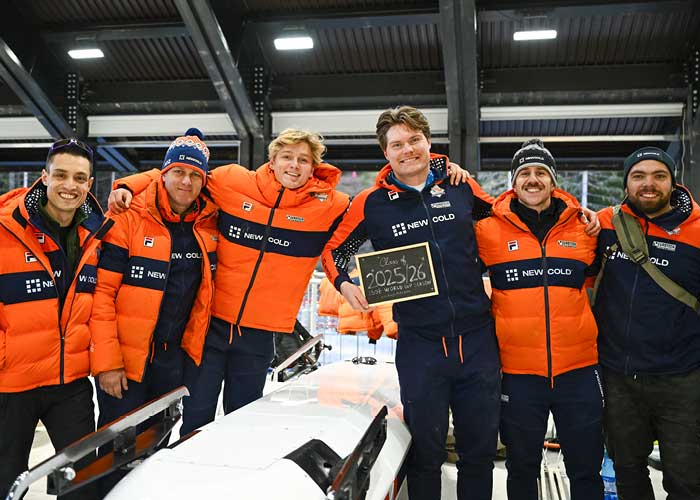
Paul’s work with the Dutch National Bobsleigh and Skeleton team began with an approach he initiated himself. “I reached out and explained who I was, what I offered and why it could be valuable,” he says.
His role focuses on preparing athletes mentally for the pressures of Olympic competition.
“High performance isn’t just about what happens on the track,” Paul explains. “We talk about how athletes are feeling, what’s happening at home, and how that affects performance.” Paul has even experienced the sport first-hand, taking a ride on a skeleton sled himself. “It was terrifying,” he admits. “Your head is just centimetres from the ice!”
Whether working with Olympic athletes or senior executives, Paul believes the same principles apply.
“Often we focus on what isn’t going well,” he says. “Instead, pause and ask: what went well this week — and how can we intentionally do more of that?” He believes this simple question can significantly improve resilience, wellbeing and performance in high-pressure environments.
Paul’s work has not gone unnoticed. A year after graduating, he was named one of the 100 Most Influential MBA Students in the World at the MBA World Summit in Milan, representing Warwick Business School on the global stage.
Today, he balances coaching Olympic athletes with keynote speaking engagements, helping organisations improve performance without pushing individuals towards burnout. Reflecting on his journey, Paul’s advice to prospective students is simple: “Enjoy every moment. It’s a life-changing period that goes by incredibly fast. I wouldn’t be where I am today without this MBA.”
Discover more Change Makers who realised their potential with Warwick Business School.
 X
X Facebook
 LinkedIn
 YouTube
 Instagram
 Tiktok