


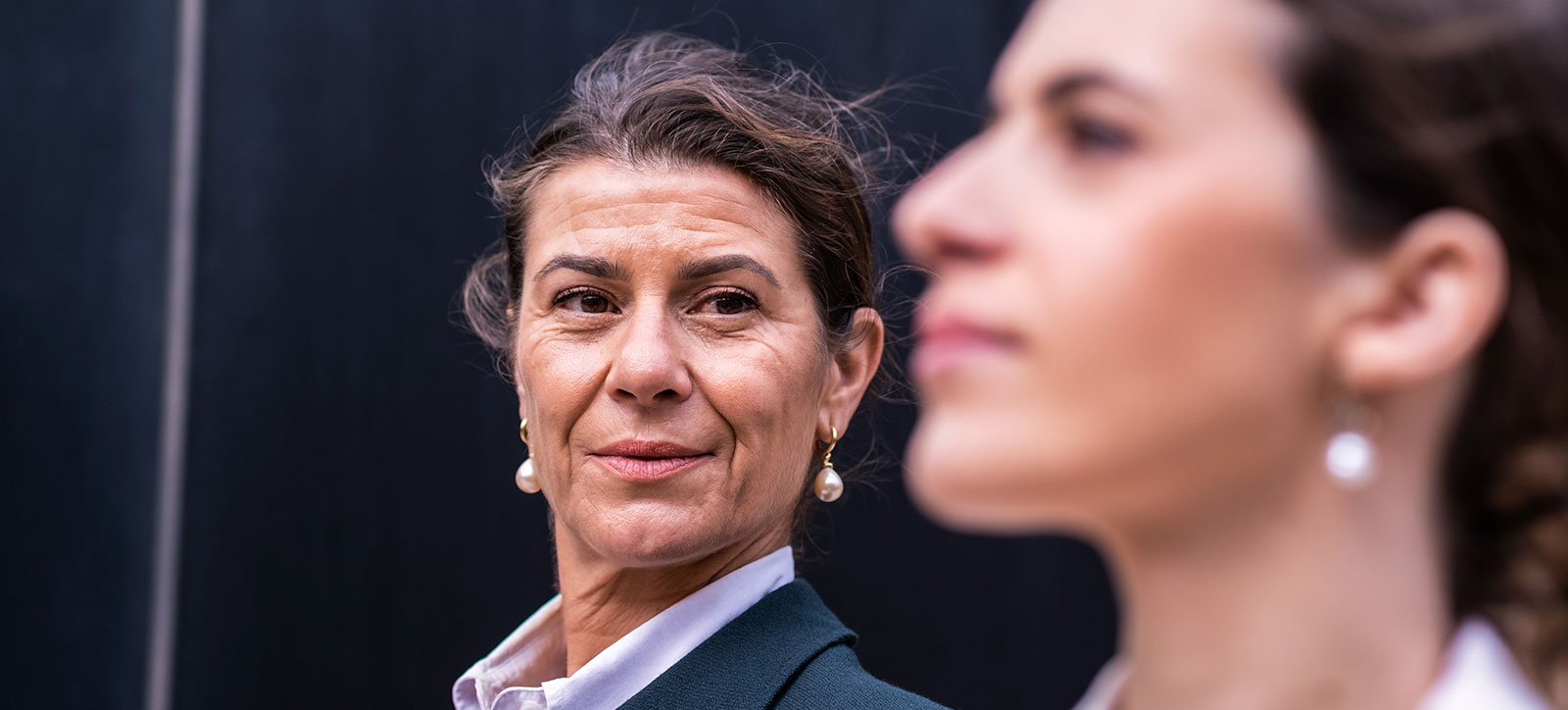
Legacy: A true leader leaves behind a team full of leaders ready to take over
In the daily swirl of corporate jargon we often hear the distinction made between a 'leader' and a 'manager'.
One is supposedly the visionary, the other the administrator. Yet, after decades studying the dynamics of the world’s most successful organisations, I find this separation unhelpful, and frankly often misleading.
The truth is, challenges inherent in guiding people and allocating resources are universal, regardless of one’s position on the hierarchical ladder. Whether you are running a multinational conglomerate or a small operational team, the core duties remain the same.
True leadership - and what ultimately determines corporate longevity - is not defined by a grand title or corner office. It is defined by a consistent, repeatable performance across two critical and non-negotiable dimensions.
Defining leadership
The continuous discourse around what is leadership frequently obscures a straightforward and pragmatic reality. It is not an abstract quality; it is a measurable equation of impact.
For me, an effective leader is one who achieves success along two axes simultaneously. The first dimension is performance: achieving concrete, measurable results for the team, group, or organisation under their charge. This is the fiduciary, tangible part of the job - delivering on quarterly goals, driving innovation, and ensuring the machinery of the business is efficient.
However, the pursuit of performance alone leads to exhaustion, burnout, and high turnover. This brings us to the second, and arguably more human, dimension: creating opportunities for the people who work for you.
Leadership, at its best, is about providing individuals with a meaningful context for their work, a path for professional growth, and ultimately, giving them a reason to come to work beyond their monthly salary. A good leader marries robust results with genuine growth, ensuring that success is sustained by a motivated and capable workforce.
Leadership definition: More than just authority
This dual-focus provides a clear and actionable leadership definition that moves beyond simple authority. If a leader fails to deliver results, they are ultimately unsustainable. If they deliver results but fail to empower their people, their success is temporary, built on a foundation of sand, because they have failed to build the necessary talent pipeline.
This perspective challenges the romantic notion that leadership is solely about charisma or vision. It demands operational reality: the ability to execute, coupled with the emotional intelligence to build trust and foster development. The ultimate test of a leader is not how many people they manage, but whether the organisation they lead would continue to thrive - and develop its next generation of talent - if they suddenly stepped away.
The role of a strategic mindset
In an era defined by disruption and the current maelstrom of AI, a strategic mindset is the most valuable currency an executive possesses. Yet, strategy is habitually misunderstood. It is not merely the creation of a glossy, multi-year plan locked away in a filing cabinet. It is the active, daily process of allocation and limitation.
A truly strategic mindset is less about determining what to do and more about knowing what not to do. Strategy, fundamentally, is about choice. It demands rigour in assessing existing commitments and the courage to sever those that no longer serve the core mission.
The single biggest leadership challenge I observe across major corporations is the inability to stop doing things. We launch new initiatives with fanfare, but when they underperform or become strategically obsolete, the inertia of sunken costs and internal politics keeps them alive.
The ultimate strategic act is not the dramatic merger or acquisition; it is the quiet, disciplined decision to divest, to exit a market, or to shutter a beloved, yet unprofitable, business unit. This requires not just financial acumen, but the rare trait of self-awareness - knowing what the organisation is genuinely good at, and, crucially, where its efforts are merely mediocre.
Importance of strategic leadership in modern organisations
Strategic leadership ensures that every resource - capital, talent, and attention - is directed towards areas that maximise the company’s competitive advantage.
In modern organisations, which are often sprawling and complex, this clarity is paramount. Without a strategic leader actively challenging the status quo and pruning unnecessary initiatives, complexity spirals, bureaucracy mounts, decision-making slows, and the organisation loses the agility required to react to market shifts.
The strategic leader acts as the organisation’s anchor in the storm, ensuring that all movements align with a core direction, even when the wind changes. This requires a level of internal diplomatic skill that matches their external vision.
Key characteristics of effective leaders
While leadership is learned and honed, certain characteristics serve as accelerators for success, especially in navigating complexity.
A leader must articulate a vision and direction that is compelling and practical. It must be a magnet, drawing people towards a shared future, but it must also be grounded in achievable steps. The vision is what motivates, but the direction - the tactical roadmap - is what ensures accountability and focus.
In the strategic domain, empathy and emotional intelligence are essential. Strategy is executed by people, and execution often requires sacrifice or change. A leader must be able to anticipate the anxieties and resistances their strategic decisions will create.
Empathy is not softness; it is a tool for understanding human risk and ensuring that communication is tailored to build buy-in, rather than simply issuing commands. Understanding how your team members are feeling, whether they feel overstretched, included, or motivated, is the crucial input for managing their performance effectively.
The ability for rapid, yet rational, decision-making and problem-solving separates effective leaders from those who merely deliberate. This means visualising potential outcomes, prioritising the future success of the company over short-term political comfort, and critically, building a culture where failures resulting from good-faith risks are seen as learning opportunities, not career-ending mistakes. The fear of failure paralyses strategic action; a good leader fosters the psychological safety needed for bold decisions.
Leadership styles and their impact
The notion of a single ‘best’ style of leadership is a relic of the past. Today’s effective executive must be versatile, adapting their approach to the specific maturity of their team and the demands of the situation.
There are many styles recorded in academic research and in popular books, but these are all context-specific and an effective leader will hone and find the style that works in their particular organisation and situation.
Transformational leadership focuses on inspiring and motivating followers to achieve extraordinary outcomes, often beyond their self-interest. These leaders create a compelling vision for the future and challenge the status quo, encouraging innovation and creativity. This style is most effective during periods of high growth, major turnaround, or cultural change, where the mission requires a profound shift in mindset and elevated commitment.
The servant leadership model shifts the focus entirely: the leader’s primary goal is to serve the needs of their team members, helping them develop and perform to their highest potential. This style is characterised by deep listening, empathy, and community building.
While transformational leadership is focused on the organisation's overarching objectives, servant leadership is intrinsically focused on the individual follower’s well-being and growth, which in turn leads to superior, sustainable organisational outcomes.
The most practical style for the daily operations of a large organisation is often situational leadership. Developed by US Professors Ken Hersey and Paul Blanchard, this theory posits that there is no single best way to lead. Instead, the leader must adapt their style, moving between directive and supportive behaviours based on the competence and readiness of the specific person they are managing. This adaptability prevents micro-management of high-performers and avoids abandonment of those who require detailed guidance.
The evolving landscape of leadership
The past few years have accelerated changes in the workplace that demand a fundamental reassessment of how leadership is exercised.
Technology has transformed the flow of information, making data-driven insights instantaneous and predictive analytics commonplace. Leadership in the age of technology and AI requires proficiency not just in using these tools, but in interpreting the data to fuel strategic decision-making.
Leaders must be adept at leveraging AI and machine learning to understand customer behaviour and market shifts, and so maintaining a competitive edge.
Simultaneously, they must navigate the ethical pitfalls of data privacy and cybersecurity, ensuring that technological capability does not erode stakeholder trust. The challenge is blending technology and humanity, while using data to enhance, not replace, judgement.
The shift to hybrid working and leading remote teams has made soft skills hard requirements. Physical presence is no longer a reliable measure of involvement. Instead, leaders must build a virtual culture, fostering trust and connection without the benefit of the 'water cooler' moments. Effective remote leadership relies on:
- Intentional communication: This is moving beyond simple check-ins to structured, emotionally intelligent digital communication that accounts for tone and timing across asynchronous channels
- Focus on output: Management must pivot from overseeing time-in-seat to measuring tangible deliverables, thereby empowering employee autonomy
- Digital inclusion: Ensuring employees across different time zones and locations feel equally valued and have equal access to information and opportunities.
The future of leadership
The essence of leadership today boils down to conscious, strategic choices. It is the ability to sustain dual accountability - delivering performance while nurturing talent - and possessing the conviction to cut commitments that drain organisational energy.
The modern environment is a perpetual laboratory. The leaders of tomorrow must accept that they are, first and foremost, continuous learners. The skills that delivered success yesterday will not be sufficient for the complex challenges emerging next quarter. This necessitates humility and a commitment to seeking out new exposures and new perspectives.
The ultimate test of a leader is not their current success, but the quality of the leaders they leave behind. Developing the next generation is not achieved merely by sending them on leadership courses. It requires a combination of structured training and genuine, high-stakes exposure to new situations. It means delegating complex problems and providing a safety net - allowing people to fail and, crucially, to learn from those failures without disproportionate consequence.
For the strategic leader, the work is never done. It is a continuous process of disciplined strategic choice, empathetic people development, and, most importantly, the clear-eyed decision on what must be stopped to allow true growth to flourish. The future belongs to those who are willing to make that difficult choice.
Further reading:
Leading AI transformation: Essential skills for modern leaders
Mental health support stalls as UK presenteeism hits post-pandemic high
Exploring the strategic mindset of leadership: Insights from industry leaders
The key leadership skills for small business growth
Christian Stadler is Professor of Strategic Management and teaches Strategic Advantage and Strategy and Practice on the Executive MBA and Global Online MBA.
Learn more about leadership on the WBS Emerging Leaders Programme.
Discover more about Leadership and Strategy. Receive our Core Insights newsletter via email or LinkedIn.
 X
X Facebook
 LinkedIn
 YouTube
 Instagram
 Tiktok