Building Bridges in the Bay Area: WBS Alumni in San Francisco
WBS alumni and students recently gathered in San Francisco for an evening of networking and industry insights.


When is an idea worth pursuing? What happens when things don't go to plan? And how do you know when walking away is the right call? These were just some of the questions discussed in a recent event in San Francisco.
The event was part of a visit for the WBS MBA Entrepreneurial Finance module. Professor Simon Barnes, Assistant Dean at WBS and students were joined by alumni on one of the evenings for a fireside chat on Entrepreneurial Journeys: When to Start, Pivot and Walk Away.
MBA alum Kevin Line, Technical Director at Saint-Gobain, co-hosted the evening. Here, he tells us what happened in the room.
“On October 6, in the middle of San Francisco Tech Week, I had the privilege of co-hosting a fireside chat with fellow Warwick alum Ryan Choi for about 25 MBA students in Simon Barnes's Entrepreneurial Finance module. Five alumni came out for it: four locals, plus me in from Nashville. The ground rule was simple: pencils down. No highlight reels, no "we sold the company and moved to the Maldives." Just an honest hour about why building something is hard, and why you sometimes change your mind.
“We started the way any good evening starts: coaxing people out of the back rows. Ryan, who served two years in the Korean military, admitted the drill-sergeant instinct to shout "everybody move forward" was hard to resist.
“Then we went around the room. Who's founded something before? A few hands. Who wants to? More hands. And a handful of students were already deep in it, mid-build and mid-raise, carrying the particular tiredness of people doing a demanding MBA and a startup at the same time. That set the tone. This wasn't a lecture. It was a room full of people at different points on the same road, comparing notes.”
“Ryan's path is the kind that looks obvious only in hindsight: Warwick PPE, military service, tech M&A in San Francisco, then a leap to become the first business hire at an early-stage startup. His family thought he was a little mad to walk away from a strong banking career.
“His reasoning stuck with the room. "Being good can be the easiest reason to stay," he said. Early in a career, he argued, the real risk isn't leaving. It's staying five more years, getting better at something you're not sure you want, and carrying the "what if" that only gets harder to act on with time.”
“My contribution included some scar tissue. I shared a story from early in my career about a partnership that went badly wrong. The lesson counts: as much as you trust the people you build with, you need real controls, clear ownership, and a plan for how you'll part ways, agreed on day one, while everyone still likes each other.
“That sparked the most valuable stretch of the night. Students who are living some version of this right now spoke up, and investors in the room weighed in with hard-won perspective. Everyone landed in the same place: get your shares allocated, your vesting written down, and your cap table clean before an investor ever has to ask.
“I also talked about the recycling company that eventually sold to a big conglomerate. We had a great sustainability story, and it turned out that wasn't enough. "People like the story," I told the room, "but they don't pay you for the story." What finally worked was finding a small, overlooked corner of the market the big players had walked away from, going deep there, and having backers patient enough to fund several pivots along the way.”
“The best question of the night came from a student who asked it simply: "How do you know the idea is the right idea?"
“My honest answer was that I didn't. I told the story of a little consumer product I built for myself because I traveled constantly and wanted to keep training on the road. The first few were made at home with my kids. Then the world changed overnight in 2020, and a hobby turned into a real business for a while. The lesson I took away: if you solve a real problem, you can usually find a buyer. Whether the economics work, and whether your timing is right, are the harder questions.
“Ryan came at it from the other side. Ideas matter less than people think, he said; execution is what counts. But before you pour everything into execution, take the time to understand why you're doing it, what you want to be great at, and who you want beside you. Get that right, and the "how" gets much easier. He was candid that he's working through those questions himself right now, which made it land all the more.
“Simon asked a student why he was waiting until graduation to start his venture. The answer, after a pause, was the most honest moment of the evening: "I think we might just decide to do it."
“The last question was the simplest: any regrets? Mine was that I wish I'd done my MBA twenty years earlier. Startups are scary to get into, but I've never regretted one after I got in. If anything, I regret not doing more.
“Thank you to Simon Barnes for bringing his class back to San Francisco, to Rachel Carroll, Regional Chair for the North America Alumni Network for building the network that made this happen, to Ryan for his honesty, and to every student who asked a hard question. The module returns to the Bay area April 19–23, and I hope we'll do this again.
“These are the conversations I want to spend more of my time on: with founders, and investors working through the messy middle. If that's you, lets connect.”
Find out more about Global Alumni Networks here.
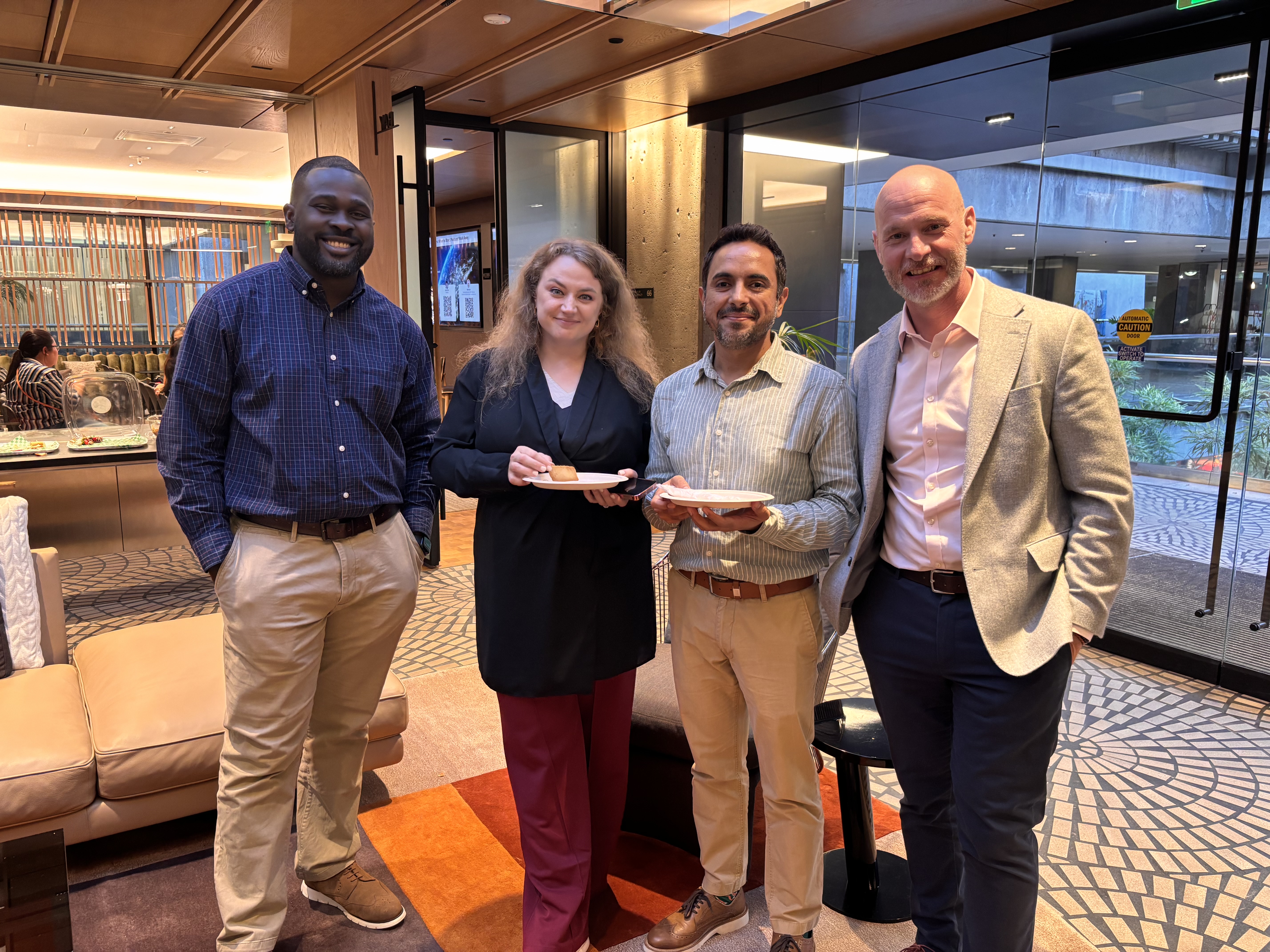
WBS alumni and students recently gathered in San Francisco for an evening of networking and industry insights.
Meet Rachel Carroll, Regional Chair for the North America Alumni Network.
From global networks and exclusive events to dedicated careers support no matter where you are in your journey. Find out about WBS alumni benefits.
 X
 Facebook
 LinkedIn
 YouTube
 Instagram
 Tiktok