


Mastering exams: A practical guide to studying smarter, not harder
Exams can feel overwhelming, especially when you’re trying to juggle revision with daily life. Undergraduate student Crystal Lo shares how a change in mindset, better planning and balanced revision helped her make exam season more manageable.
Exams are a marathon, not a sprint
I used to find exams overwhelming and stressful, largely because I lacked a clear plan. Without structure, I would leave revision until the last minute and end up cramming. Over time, I realised that my approach was the problem, not the exams themselves. With the right strategy, structure and mindset, I now see exams as a marathon rather than a sprint, and this perspective has made them far more manageable.
Tip 1: Start early by understanding the exam
Once revision lectures finish in Term 3, exams may feel far away, but this is the best time to start. I first mark all exam dates clearly in my calendar and then focus on understanding the exam itself.
Because different exam formats require different study strategies, I familiarise myself with the format: whether it is online or in person, the duration, number of sections, and assessment types such as MCQs, short answers, or essays. Completing the mock exams for online exams on the Warwick Assessment System also helps reduce anxiety by being familiar with the platform.
Tip 2: Build a revision routine that works for you
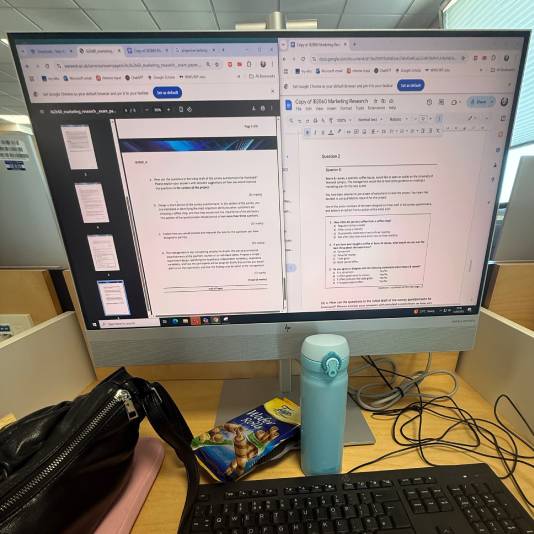
After identifying which modules need more time and which exams come first, I start planning. I set long-term goals, such as finishing a topic by the end of the week and break these down into short daily to-do lists because crossing tasks off keeps me motivated without feeling overwhelmed.
My revision usually starts with reviewing the syllabus, all lecture recordings and seminar materials to get a full overview. I then create concise, organised notes and focus on memorising key concepts and frameworks. For open-book online exams, I organise my notes with structured bullet-point outlines and headings, so information is easy to locate under time pressure. Past papers are one of the most valuable revision tools. They help me identify weak areas, understand common question styles, and practise time management.
Tip 3: Balance focus, motivation and breaks
Like most students, I struggle with procrastination and phone distractions. Limiting screen time does not work for me, so I use a timelapse recording while studying to keep my phone occupied. It surprisingly helps me stay focused.

I have also learned that balance is essential. I use structured methods like Pomodoro and set realistic goals, such as studying for two focused hours rather than finishing an entire topic followed by a 30-minute short break. For example, rewarding myself with snacks, baking, going out for fresh air and light stretching.
One of my favourite resets is a short walk to Tesco for a snack and greeting the lovely Warwick geese on the way before heading back to the library. Switching between modules and studying at my most productive time of day also helps me stay focused. Everyone works differently, so it is important to experiment and find what suits you best.
Tip 4: Environment, community, and wellbeing matter

Changing study environments helps me stay focused. Some of my favourite study spots on campus include the WBS Undergraduate Space, the Library Bridge quiet cubicles and FAB.
Studying with friends also makes exam season feel less isolating and creates accountability. Sharing notes, discussing concepts, and explaining ideas to each other also improves understanding and memory.
Academic success and wellbeing go hand in hand together, so I make sure to eat properly and get enough sleep. I still attend society events, such as my weekly dance class with EQHO Hip-Hop Dance Society and make time to enjoy campus. Exam season often coincides with great weather, making picnics at Oculus Field or Cryfield Field a perfect study break.
Progress over perfection
Mastering exams is not about being perfect, it is about consistency, balance, and self-awareness. Take small steps each day, balance studying with other fun activities, and remember that your university experience is about more than just exams. With the right approach, everyone can achieve satisfactory results by studying smarter, not harder.
 X
X Facebook
 LinkedIn
 YouTube
 Instagram
 Tiktok