


Stephen Roper: The picture remains uncertain for small firms
There may not be much good cheer for the nation’s small businesses this Christmas as many continue to struggle for recognition and appropriate support.
This was a key message from the State of Small Business Britain conference held by the Enterprise Research Centre (ERC) at Warwick Business School (WBS).
Backing and support for the ‘everyday businesses’ – making up most of the UK’s business population but regularly sidelined by mainstream political discourse – has been found wanting.
This has been especially the case for micro-enterprises, according to Mark Hart, Professor of Entrepreneurship and Enterprise Policy, and Deputy Director of the ERC.
Professor Hart presented research that showed the impressive job-creating power of micro-enterprises. His study tracked micro-enterprises employing up to four people that were founded in 1998, more than a thousand of which had created a million jobs by 2023.
Setting the findings out in the opening presentation of the conference held at the School’s London base at The Shard, Professor Hart noted that, in spite of this, micro-businesses had so far received “scant attention in the national debate about ‘scaling up’ and growing businesses”.
“There has been lots of talk about ‘scale-ups’ in recent months, especially as they are now embedded in a range of policy announcements,” he said.
“But the role of micro-enterprises in ‘scaling’ struggles for a mention – if at all.”
The struggle for recognition was a theme also taken up by Stephen Roper, Professor of Enterprise and Director of the ERC, who welcomed the Small Business Plan unveiled by the UK Government this summer, which recognised the importance of the ‘everyday economy’ of local businesses, but urged the Government to go further.
“There have been some very specific measures to help small companies but overall the picture remains one of uncertainty,” he said.
“I would have liked to have seen the Government articulating a more positive vision for small businesses in its recent Budget statement.
“Given the right support, there are buoyant opportunities for small firms but I felt this was the missing element in the Budget narrative.”
Meanwhile, Professor Monder Ram, of Aston University, said that local businesses such as corner shops, restaurants and social enterprises had often been overlooked in the “never-ending search for that ‘unicorn’ tech business”.
In his presentation to the conference, he urged the Government to go further in backing partnerships between local enterprise agencies and the community-embedded businesses.
These businesses “don’t lack ambition, just a lack of recognition in a world that doesn’t recognise quiet, local innovation”, the Director of the Centre for Research in Ethnic Minority Entrepreneurship at Aston University said.
Is starting a business all about who you know?
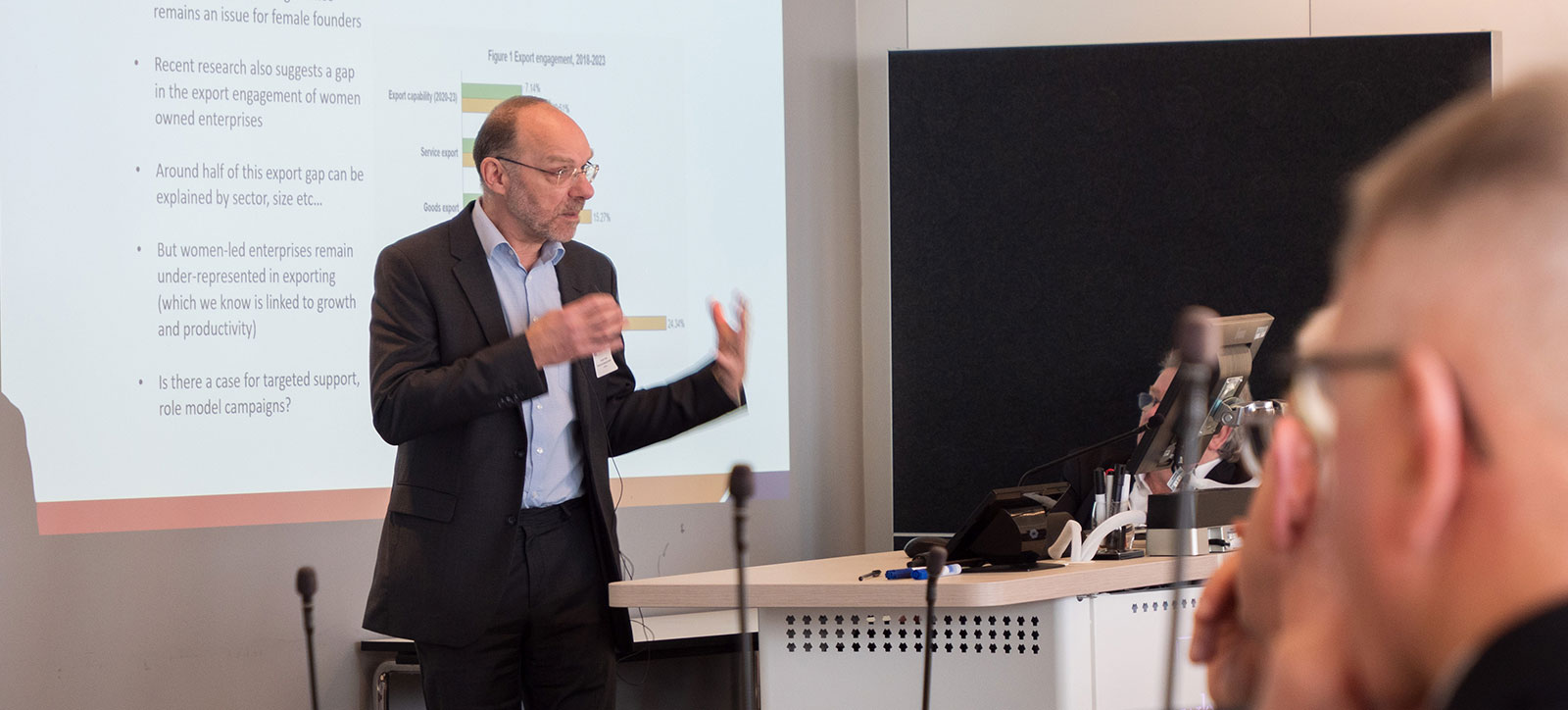
The question of whether small business support can fully address the diversity of Britain’s entrepreneurial community and create growth was a prevailing theme of the conference. Lorna Treanor, of the University of Nottingham, spoke about supporting innovation and growth in female-led businesses, while Kelly Bewers, of start-up support service City Ventures, delivered a presentation on the theme of reimagining entrepreneurship.
Dr Treanor told the conference that, with investor attitudes changing very little over the years, female founders still struggled to gain venture capital funding.
Bewers, meanwhile, told the conference audience that succeeding as a company founder was as much about who you know and where you went to school as it was about finance.
Citing the Cornerstone Report of 2020, which revealed that 75 per cent of UK start-up founders came from affluent or privileged backgrounds, she argued for a more inclusive start-up ecosystem that encouraged entrepreneurs from other socio-economic backgrounds.
The conference programme also included a business panel discussion between entrepreneurs, and a conversation between former Cabinet Minsiter Greg Clark, now Executive Chair of Warwick Innovation District, and Steve Rigby, of the Rigby Group, on building a strong local entrepreneurial ecosystem.
In discussion with Professor Hart, meanwhile, Angelina Cannizzaro, of the Department for Business and Trade, outlined some of the measures made available by the Budget and the Government’s small business strategy for smaller enterprises.
These include lower business rates for some in the hospitality and retail sector, and more investments in growth-stage funds and scale-up companies by the British Business Bank.
Most of the UK’s 5.7 million businesses are small companies (under 50 employees) with less than 50,000 businesses either medium-sized or large. A large proportion of small companies are micro-enterprises employing less than 10 people.
Stephen Roper is Professor of Enterprise and Director of the Enterprise Research Centre.
Mark Hart is Deputy Director of the Enterprise Research Centre.
Discover more on Digital Innovation and Entrepreneurship. Receive our Core Insights newsletter via email or LinkedIn.
 X
X Facebook
 LinkedIn
 YouTube
 Instagram
 Tiktok