
Can you tell us a bit about yourself?
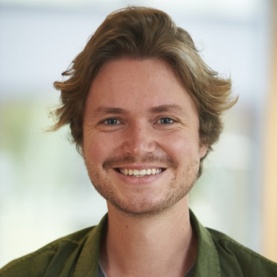
Hi, I’m Tristan, I’m 28 and I’m from Belgium. I did my undergrad in Belgium and then travelled the world during my gap year. I did this because I have Muscular Dystrophy (Limb-Girdle Muscular Dystrophy to be precise) which is expected to make my muscles worse over time unless a cure is found.
So, I figured that if I wanted to see the world, go to Machu Picchu, see Everest, dance with random strangers in Vietnam, do a road trip in Australia with fellow backpackers, explore the ruins of Angkor Wat and swim with sharks at the Galapagos Islands, that I’d have to do it now (so 2 years ago). And so I did! I solo travelled the world for a year, and then went on to do an MSc in Consumer Behaviour.
My disability hasn’t held me back, nor do I intend it to ever hold me back or even define me. I am aware that this story is both depressing and inspiring (according to people around me), but I am just me, Tristan (not “that guy with a disability”), living life in the only way I know how, which is with a smile on my face while I travel the world, do a PhD, have fun with friends or have hospital visits.
What did you do prior to starting your PhD?
I studied in Ghent and did management and marketing for my BSc. More recently I finished my MSc in Consumer Behaviour at Reading Uni.
What motivated you to do a PhD?
I simply don’t want to have a real 9-5 job! Jokes aside, I have always been interested in what makes people do what they do. Why do we make the decisions we make? Even the funny/”irrational” ones? For example, why do we buy more French wine when the store plays classical French music? Why are we more likely to do nothing in a crisis when everyone else is also doing nothing? How can we use this knowledge to support the effort to stop climate change, help businesses and design our cities? Stuff like that has always been fascinating to me.
Can you tell us why you chose to study for your PhD at WBS?
When choosing a PhD programme, I wanted to be surrounded by experts working on the same thing as me (and have a good supervisor whom I get along with), to be at a prestigious institution which would open doors for me anywhere I go, and I wanted to stay in the UK because the UK is so much better accessibility wise.
And I wanted to be paid for the work I do. In the field of Behavioural Science that left me with a few options, but none seemed as enticing as WBS or offered the same benefits I was looking for. Honestly, I was a little scared coming to WBS, it being so far from London and home, but I have been immensely impressed by the amount of experience and knowledge in my group. I now work together with the people I used to reference! It’s probably a nerd-thing to be excited by this, but I absolutely love it.
What is the application process like when applying for a PhD?
The application here is a tad different from other UK universities, where you usually would have to contact a supervisor first and get their support, however at WBS you can apply without any of that. Furthermore, I knew that, if I got in, I would receive a stipend and they would pay for my tuition and visa fees. At some universities you do all that work to apply and get in, after which you might not even be sure if you can go because of student fees and having no security regarding stipend income.
So the prep was much more straightforward which was great, and then after getting the positive news that WBS wanted an interview, they requested that I write an essay (3000 words) on future research possibilities on a topic I liked. After that, I had a short 20-minute interview on said topic and essay, and they let me know I got accepted a week later.
I should also note that we are expected to take many statistics and research-heavy modules in the first two years of the 5 year programme, which sounded daunting at first, but now I can see the massive benefit of it. By the time I graduate, I will have such a strong foundation that many of my peers in different universities won’t have, or they will have to self-teach themselves those skills. That being said, applying for a PhD is never going to be super straightforward and simply an afternoon of work, which goes for any university. It takes time and willingness.
How has WBS supported you with your accessibility needs?
The university in general is fantastic at it. If there is a need, the disability team will take care of it. I just have to send them an email and they do the rest. If I have an issue, I know they’ll fix it or make it accessible. It’s that simple. The difference with my home country (Belgium) is just staggering.
Furthermore, I remember talking about my disability during my interview saying “I can only do the work I do if I don’t have to worry about my disability needs. I can only be me if accessibility is perfect”, after which the team interviewing me (the professors) very clearly and without a moment to think about it answered “If there is ever a problem, we (again, the professors(!)) will make sure it gets taken care of”. I haven’t needed their help, but it’s great to know that the university and the team is ready to support me to such an extent.
Here I can be Tristan, the PhD student, a friend, someone who loves film music, etc. Not “that guy with a disability”. I’m just Tristan.
What is the best thing about your PhD programme so far?
The free pizza (and lunches before meetings)! A better answer: every week, without fail, someone from the faculty mentions wanting to help (for example with coding, which I currently struggle with) or work together at some point. It’s wild how much support there is!
Tell us about the community at Warwick Business School
I can only talk from the perspective of a PhD student, but I love my cohort and lab. We go out quite often and if I ever feel like meeting other students or networking and meeting future business leaders, I can go to the seemingly endless amount of societies at WBS.
Being on a campus like Warwick and having WBS as your home is fantastic for meeting new people. The exposure you get to other people simply from being on campus is something I would not trade for city life.
What are the pros and cons to studying a PhD?
Building on the previous answer, I would not trade campus experience for anything, but being far from London (1h by train, so it’s not terribly bad either) makes it feel a tad isolating. Again, that brings its benefits too like the social aspect, but for me, it’s the only real con. The biggest pro is the stipend, for sure. I don’t know a single PhD student in the UK who did not have to worry about any of the financial aspects of applying to a PhD programme.
Do you know what you research will be based on?
Yes and no. We get to choose a supervisor and topic during year 2, so I don’t have to know the details just yet.
That being said, I think I will work on tipping points, which is looking at when a minority group suddenly and drastically influences the majority to join their behaviour, sometimes even disregarding their own beliefs or knowledge. This includes stock market behaviour (e.g., a bank run or stock selloff based on incomplete information), the growth of new social and cultural norms, patterns in habits or just doing the Mexican wave during a football game.
And I want to look at this from the perspective of nudge theory, which could enable us to start or stop these tipping points. Could. Maybe. We’ll see.
What do you hope to get out of the programme?
The possibility to go anywhere and do anything that interests me within my field. It’s very broad, I know. But it simply means that I know that having the WBS PhD will give me the option to stay in academia and go to a prestigious university (or stay at WBS) to teach and/or do research or go into policy and work at the UN, or the EU commission behavioural science groups, for example.
You asked what my “hope” was, so I might be dreaming a little, but last year someone got his PhD from WBS and went to Harvard right after. WBS is remarkably strong at making sure its alumni go somewhere interesting.
Do you have any advice for anyone currently thinking about studying for an MRes/PhD, particularly for those with any accessibility needs?
Go for it. Take the leap. Be bold. And buy me a drink when you get in!
 X
X Facebook
 LinkedIn
 YouTube
 Instagram
 Tiktok