


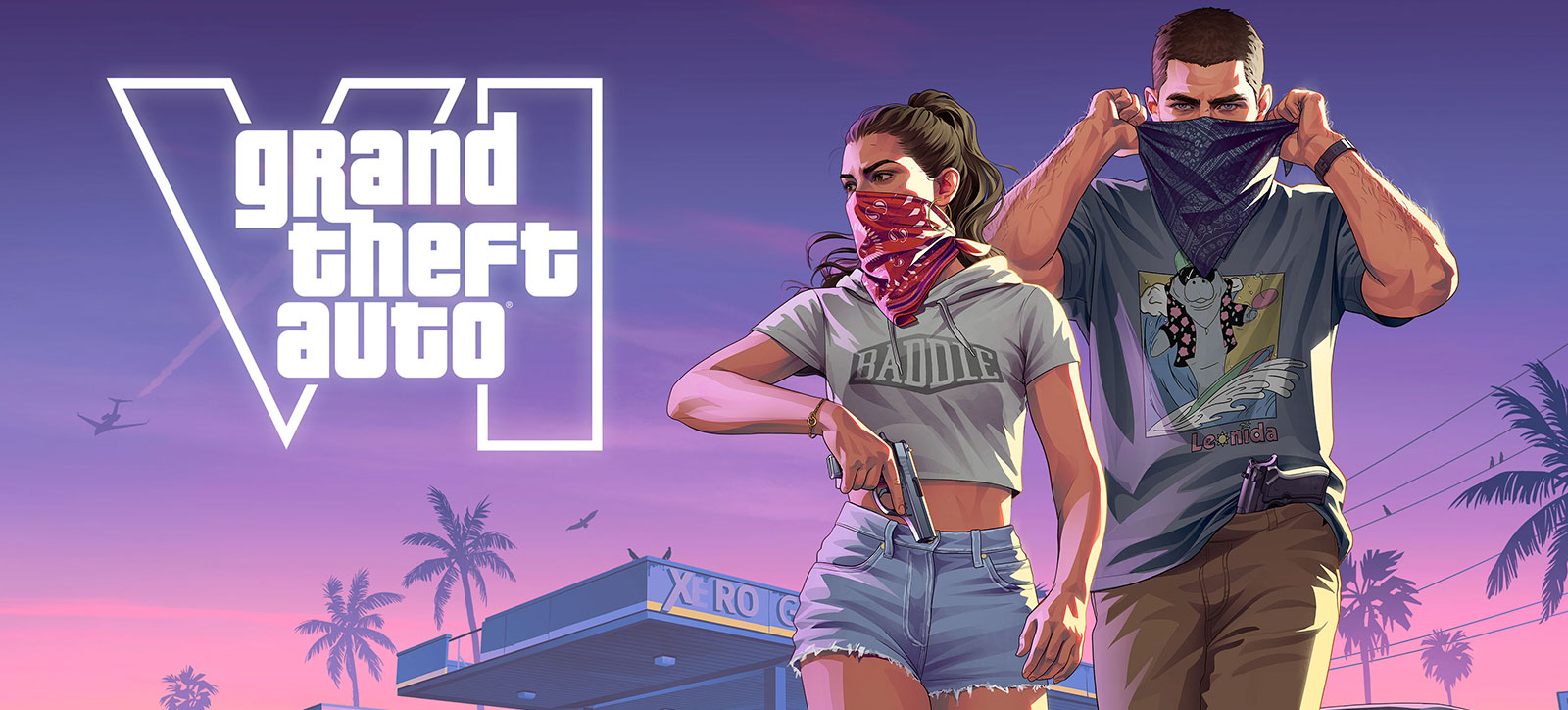
Sales drive: GTA 6 developer Take-Two Interactive's bold strategy laid the foundations for lasting success
Grand Theft Auto VI is the most eagerly anticipated game in history. It is expected to sell up to 40 million copies on the day it is released on November 19.
Analysts predict that frenzied excitement will translate into revenues of more than $3 billion.
That would see game developer Take-Two Interactive smash its own record for the biggest launch, which it set when GTA 5 made $815 million on its day of release in 2013.
This continued success offers valuable insights for executives on how a company captivated an entire industry. So, what can we learn from Take-Two Interactive's strategy?
The first impression is that Take-Two Interactive embraces the old 'blockbuster model' that was previously perfected by Hollywood.
That’s a 'rebel strategy' given that most gaming companies have worked hard to become more predictable, reducing financial volatility through recurring revenue models.
On closer inspection, there is another key factor behind Take-Two's success. It has combined that blockbuster model with revenue models that carry the company through fallow years when there are no new releases.
That's a strategy that other product-focused industries can learn from.
Find your formula for success
The roots of GTA’s success can be traced back to 1996, when Head of Development Sam Houser took a traditional police game called Race and Chase and made the player the criminal.
Instead of enforcing the law, players earned points by stealing cars, running over pedestrians, and shooting police officers.
These controversial changes earned condemnation from the House of Lords. Instead of retreating from that criticism, Take-Two treated it as free marketing. This fuelled the success of the game.
The lesson for business leaders is that firms can succeed by embracing – or even weaponising – controversy. But controversy alone was not enough to build an enduring franchise.
As computing power increased, the GTA team embraced another key component of their success. They developed immersive cinematic storytelling.
The third instalment included radio stations, pedestrian dialogues, and references to iconic gangster movies. It felt more like an interactive film attracting a mainstream audience.
When Grand Theft Auto: Vice City brought 1980s Miami to life in all its neon glory, that world-building complemented the storytelling, making it America's best-selling game of 2002.
The last component of this rebel strategy was to give the development studio big budgets and full autonomy to ensure it could come up with show-stopping games.
GTA 5 took five years to arrive and commanded an unprecedented $265 million budget. GTA 6 pushed that even further – it has taken 13 years to develop, has been postponed several times and analysts estimate that it has cost more than constructing the world's tallest building, the Burj Khalifa, in Dubai.
Take-Two does not worry about keeping to a schedule. To date, there is only a cinematic trailer and a few screenshots available for GTA 6. No gameplay or beta-versions have been released.
When the developers do release information, they do so on a random day, with little or no warning. This only serves to create more buzz among gamers.
Together, these three strategies ensure GTA delivers the quality of a hit product and the hype needed to break through in a crowded games market.
How to scale and replicate a successful strategy
A formula for building blockbusters is great. However, the real genius of Take-Two was to make it scalable and replicable.
Technology - more specifically the engine powering the GTA franchise - was crucial here. In 2004 Electronic Arts, Take-Two’s main rival, acquired Criterion Games.
The problem was that Criterion owned RenderWare, the engine used for GTA. So, Take-Two began searching for an alternative solution.
One of its subsequent acquisitions, Angel Studios (which has since been rebranded as Rockstar San Diego), had its own engine which was already in use for titles such as Midtown Madness.
Now it was tasked to develop something more powerful.
The Rockstar Advanced Game Engine (RAGE) was first tested on a table tennis game in 2006 and subsequently became the backbone of GTA. It created the capabilities necessary to build massive, highly detailed and open worlds for players to explore.
That tech allowed Take-Two to replicate its formula for success by ruthlessly overhauling other games it acquired,
For example, when it bought Capcom, it decided to cancel a cartoonish, arcade-style Japanese shooter project named Red Dead Revolver.
Instead, it injected the game with narrative grit and open-world freedom. In doing so, it transformed the project into Red Dead Redemption - a game that was more akin to GTA in the Wild West. As of today, the franchise has sold 115 million copies.
Take-Two executed the same pivot after buying a linear, mid-budget PC shooter called Max Payne. Once again, this created a high-budget cinematic blockbuster (which later made the leap to the silver screen with bankable box office star Mark Wahlberg in the title role).
Take-Two’s homegrown developments, such as Bully and Manhunt, all adopted the same formula.
Rather than reinventing the wheel with each generation, Take-Two perfected the model and applied it repeatedly across its product range.
You can think of it as the evolution of a unique, simulation-heavy blockbuster formula that worked time and time again.
Guard against the weaknesses of your strategy
There is one – very large - potential downside to Take-Two’s blockbuster formula. Once the first buzz dies off, sales inevitably start to dip.
GTA remains the most important franchise in its catalogue. However, it is also the one that takes the longest to develop.
Gamers may have been prepared to wait 13 years for the latest instalment. However, such a sizeable gap between new releases can easily frustrate investors.
Developing other hit games has helped to reduce that risk, but it did not eliminate it entirely.
To ease the company through this fallow period, Take-Two came up with a sophisticated strategy to placate investors.
First, it introduced micro-payments to generate ongoing income from GTA.
When this launched in 2013, it was marked by server crashes and other technical disasters. But Take-Two was not deterred by these teething problems.
It soon overcame these initial difficulties and players showed they were keen to purchase in-game apartments, criminal enterprises, and more powerful weapons to enhance their experience.
By April 2016, GTA had earned $500 million in cumulative micro-payments.
Take-Two's second step was to diversify. Adult-rated blockbusters continued to run under its Rockstar Games label.
Meanwhile, its family friendly games were published by 2K. This includes annual sports game releases like NBA 2K, which provide the company with another predictable revenue stream.
Why are diverse revenue streams so important?
This strategy of diversification was taken one step further with the $12.7 billion acquisition of Zynga, a mobile phone gaming company.
During the financial year ending in March 2026, Zynga accounted for around 50 per cent of Take-Two revenues. By comparison, Rockstar Games accounted for 16 per cent and 2K for 34 per cent.
This is expected to shift dramatically after the release of GTA 6. With Rockstar's sales expected to triple, it is likely to account for 36 per cent of its parent company's revenue.
That does not mean 2K and Zynga are shrinking - or are any less important to Take-Two's strategy. It is simply a manifestation of how the blockbuster model works.
Combining smart hedging techniques with the blockbuster formula that it could replicate repeatedly makes the Take-Two strategy a great blueprint for product-focused companies.
This doesn't just apply to creative industries. Pharmaceutical companies and automotive firms can copy this approach too.
However, any leaders attempting to learn from Take-Two should heed a final note of caution. Great strategies are always unique.
You may draw inspiration from Take-Two's success, but don't try to follow it exactly. You need to adapt that strategy to work for your company.
- This article is adapted from a column by Professor Christian Stadler, which was originally published by Forbes.
Further reading:
Douyin: How should digital start-ups pursue growth?
Lessons in leadership agility from BYD
What is the secret to Walmart's success?
Back to the Future: Strategy lessons from General Electric and the 1990s
Christian Stadler is Professor of Strategic Management and teaches Strategic Advantage and Strategy and Practice on the Executive MBA and Global Online MBA. He is the author of Enduring Success: What we can learn from the history of outstanding corporations.
Learn to lead with renewed purpose, resilience, and adaptability with the WBS Executive Leadership programme.
Discover more about strategy. Receive our Core Insights newsletter via email or LinkedIn.
Choose Warwick Business School as a preferred source of trusted insights in your Google searches.
 X
 Facebook
 LinkedIn
 YouTube
 Instagram
 Tiktok