


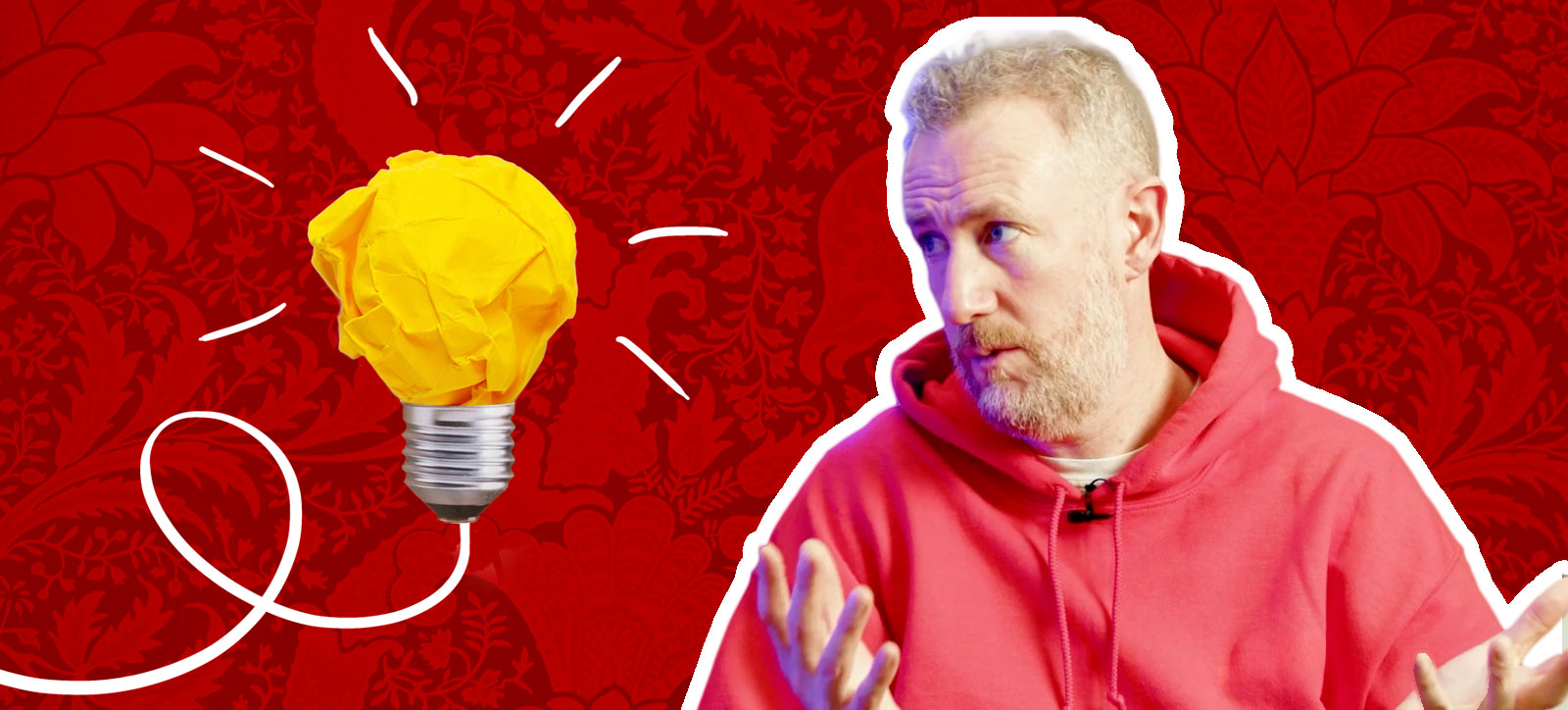
Task force: Rather than limiting our imagination, constraints can spur creativity through associated ideas
The Bafta-winning comedy game show, Taskmaster, has returned to Channel 4 for its 21st series and has even become an online success in the US. Part of the show’s long-running appeal is its lighthearted exhibition of human creativity.
Recently, I was part of the Warwick Business School Lead out Loud podcast with Alex Horne, the show’s creative mastermind and star, to talk about Taskmaster’s lessons for leadership. His creativity is an inspiration.
The show is ripe with insights on how to be more creative in our working lives and daily tasks – even if they are more subdued than the ones the contestants must solve in the Taskmaster house.
Below are five lessons in creativity we can all take from the Taskmaster playbook.
1 Thinking inside the box
One of the biggest myths of creativity is that constraints limit our imagination. But decades of research have shown this is not true – constraints actually spur creativity, often through associational thinking where the constraint triggers other related thoughts or ideas.
In the last series of Taskmaster, one task was to bring “a very soft thing that would be most beneficial for Greg [the Taskmaster]”. The constraint of “soft” led to very different mental associations for each contestant, resulting in a hilarious assortment of solutions – a cushion made of cat hair, a bonnet with a manly design, a bird that tells fortunes, a blanket that can be worn and “the hands and voices of the elderly”.
Constraints have also served as inspiration for Horne when developing the tasks. In the Lead out Loud podcast, he described the COVID constraint of keeping contestants two metres apart. “It was a really fun constraint to work with,” he explained.
“It gave us something to play with. The whole show is about constraints.”
2 Reframing the problem
When we face a problem, most of us jump immediately into idea generation. However, there is great power in pausing to fully explore the problem and consider how it can be framed and reframed.
This may involve asking the question differently, exploring alternative perspectives, or considering all of the factors associated with the problem. Even more challenging is rethinking assumptions about the problem itself.
The most creative contestants often turn the challenge on its head, breaking assumptions about the task’s rules.
In a task during series two, contestants were instructed to place three exercise balls on a yoga mat on top of a hill. Four contestants assumed this meant the balls must be moved up the hill and placed on the mat.
Richard Osman, the creator and former co-presenter of the quiz show Pointless and author of the Thursday Murder Club novels, took a different approach. He brought the mat down to the balls and won the round. Unlike the others, he paused to reread the instructions and reframed how they could be interpreted, capitalising on the ambiguity.
3 Embracing experimentation and failure
The joy and humour of Taskmaster is primarily in the meandering, hilarious journey the contestants take to their final solution. We have a window into how five very different people think through a problem from their unique perspectives.
It also highlights that there is no one right way to solve most problems, whether they are an absurd task on a game show, developing a new sales strategy, or figuring out how to entertain your toddler.
In embracing uncertainty and improvisation, the show also implicitly (and sometimes explicitly) makes failure okay. The key to this is the psychological safety we see on the show – a key component of innovative teams and an intentional part of the show’s design.
Psychological safety means, among other things, that you feel it is safe to take risks and make mistakes, you can ask for help and those around you won’t ridicule or reject you.
When asked how contestants respond to moments of failure, Horne said: “The comedians have to feel safe. Because I’m a comedian and a producer on it as well … they feel a bit more in safe hands that they can take risks and if it doesn’t work, it doesn’t matter. So from the beginning we’ve tried to create this place where you can muck about, and we’re not going to show you in a bad light.”
Allowing for experimentation and tolerance of what Professor of Leadership Amy Edmondson calls “intelligent failure” is essential to innovation.
4 Creativity breeds creativity
After coming up with so many tasks, Horne was asked on the Winging It podcast if he feels his well of ideas is drying up. He responded that he often thinks of new tasks when he’s creating other tasks. “That’s when you’re most fertile. Wells don’t dry up. Wells are built near natural springs.”
When generating ideas, it can often feel like we are “running out” of ideas because the pace of idea generation slows down. This is an artefact of the rapid production of the more obvious solutions at the start. However, as the pace of idea generation slows down, the originality of ideas goes up. When the pace slows, we must shift into strategies that require more effort, but ultimately result in more creative solutions.
Generating ideas in teams can help this because it enables cross-fertilisation, where one team member’s ideas spark ideas in someone else, causing the well to fill up again. Team challenges on the show provide many examples of this.
5 It’s all fun and games
At the end of the day, Taskmaster is a game show. Our lives of crafting AI prompts, inbox management and Teams meetings may seem a far cry from the hijinks in the Taskmaster house.
You may therefore think that our real work lives are not a fair comparison for lessons on creativity from Taskmaster. But the research on playfulness and creativity in organisations would say otherwise.
Creating a sense of playfulness in teams and organisations can foster creativity, as can humour. Perhaps the key to facilitating your own team or organisation’s creativity could be hosting your own round of Taskmaster!
This article was first published by The Conversation.
Further reading:
Can joy improve our performance at work
Six steps to harness the creativity of volunteers
AI may be making companies less creative
Tamara Friedrich is Associate Professor of Entrepreneurship and Innovation at Warwick Business School. She teaches Global Challenges for the Public Sector on the Global Online MBA and the Part-time MBA (London Accelerator); Leadership on the Executive MBA; and Leadership, Organisational Behaviour and Global Challenges for the Public Sector on the Executive MBA (London). She also teaches Entrepreneurial Mindset on the MSc Management and our Undergraduate programmes.
Discover more about Creativity, Leadership, and Behavioural Science. Receive our Core Insights newsletter via email or LinkedIn.
 X
X Facebook
 LinkedIn
 YouTube
 Instagram
 Tiktok