

Big ambition: Executive MBA Arokia Antonysamy has used the start-up programme to develop and launch her mental health app AroQuest
By the time many young people reach Arokia Antonysamy's consulting room the warning signs have long been apparent.
"They lose sleep, their appetite, have social withdrawal - can't be bothered," says the addiction psychiatrist. "They lose friendships, they drop out of uni, they drop out of school, they lose relationships with family - a lot of the damage is already done by the time I see them."
After more than 20 years working in psychiatry, Arokia had become increasingly frustrated with intervening only when young people had reached crisis point.
With the help of the Warwick Enterprise Start-up Programme, Arokia is now developing an app that will tackle a problem that is widespread, with UNICEF reporting in 2025 that 60 per cent of Gen Z feel overwhelmed and only 55 per cent believe they have effective coping mechanisms.
"To prevent them from slipping into mental illness, I realised I needed to do something that happens at the very beginning," she says. "That very beginning is loss of motivation."
The London-based psychiatrist is attempting to address that through AroQuest, a gamified mental fitness app aimed at Gen Z, typically defined as those born between 1997 to 2012.
After building a successful career as a clinician, where she was Clinical Director at Lancashire Care NHS Foundation Trust and then Regional Medical Director at Cygnet Health Care, Arokia credits the School's Executive MBA for helping her take the plunge to be an entrepreneur.
"It was a huge risk," says Arokia, who grew up in Neyveli, a township in southern India as one of seven children, with her father working in Iran and Iraq to fund private education for them. "I resigned from my well-paid, comfortable job a year ago and started my own venture."
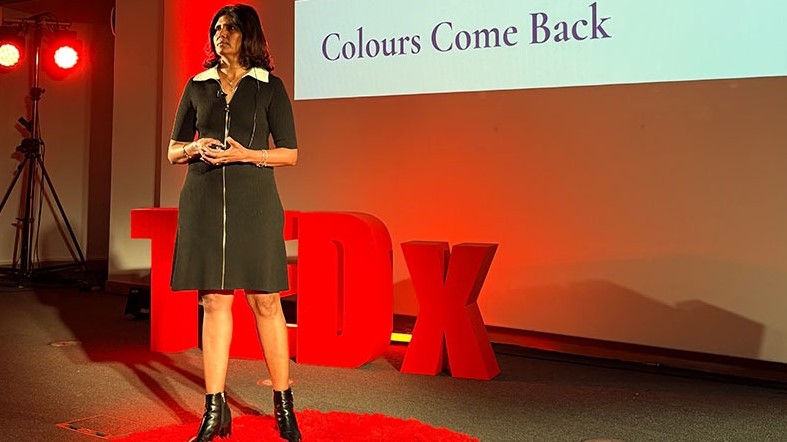
Even though she reached executive level, after studying medicine in India and moving to the UK to qualify as a consultant psychiatrist, Arokia felt increasingly constrained and realised she needed to strike out on her own to halt the mental health crisis.
"I knew something needed to be done,” she says. “Clinically I could see the problem and the solution, but communicating this and finding a way of bringing it to life seemed impossible. That is where the MBA has helped.
“Before Warwick Business School, I could articulate why it mattered clinically, but I couldn't articulate why it mattered from a commercial perspective, or how it would reach the wider population, or how I could build it and fund it. The MBA gave me the language. It gave me the structure, the framework and the confidence."
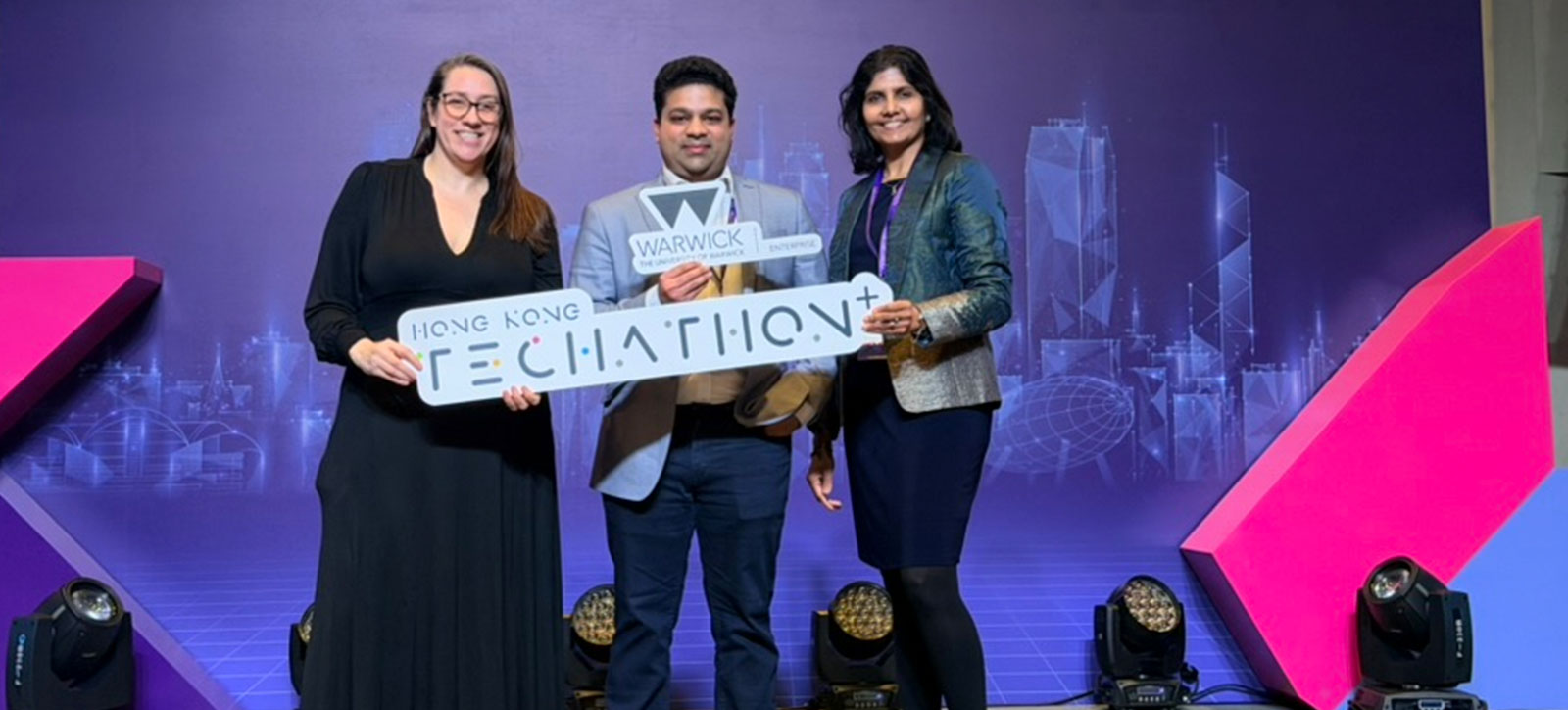
Like many entrepreneurs, Arokia discovered her first idea would not survive in its original form. MindKonnect was one of two UK projects selected for the Hong Kong Techathon, where winners gain funding for their start-up, but it risked being classed as an AI medical device, which meant a heap of costly regulation.
The start-up programme taught her these bumps in the road were part of the journey, and she learned to pivot rather than clinging on to her original idea, which would inevitably become bogged down in regulation.
"As a clinician, authority is earned through certainty," she says. "In business, it's often earned through the willingness to say, 'I don't know yet - let me test it’.
"The programme taught me how to hold both without that conflict. It helped me become more decisive about when to be curious, when to say no, and when to say: actually, let's go ahead."
Expert guidance on the start-up journey
She is particularly enthusiastic about the mentoring available through the programme. Three coaches have been assigned to her venture, each bringing different expertise.
"The enterprise programme has been amazing in putting us in touch with the right mentors and coaches who have walked through this journey before us," says Arokia, who has also recently published a book, The Gift of Hope. "It's helping us shorten that learning curve significantly.
"When I'm stuck and I have to make a key decision, I can contact one of my coaches."
Most importantly, she says, the programme gives founders the freedom to make mistakes.
"They are not spoon-feeding," she says. "They are allowing us to explore. It allows us to fail, which is very, very important because that's how I've been learning."
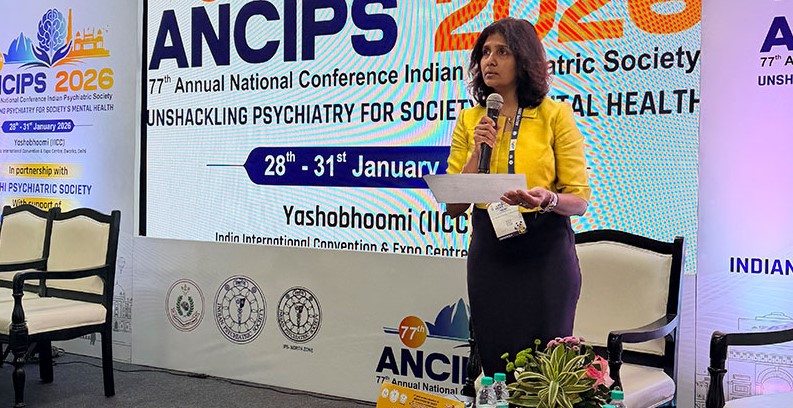
AroQuest is now nearing beta testing with university students and aims to use games, rewards and AI coaching to encourage healthy habits and outdoor activity.
The project has already gained international attention, with Arokia recently winning a Mental Health Leadership Award from the Global Woman Club, a networking organisation, and finishing second in its pitching competition, which has led to her being invited to pitch at the Unicorn Summit in Lisbon.
The 50-year-old believes the most valuable lesson from her entrepreneurial journey has been recognising that her clinical background is not a limitation but a competitive advantage.
"Twenty years of psychiatric experience is not something anybody can replicate," she says. "The unique perspective we bring to a venture is not a disadvantage to overcome. It is something that makes our venture worth backing."
For a psychiatrist who spent much of her career helping people rebuild hope, it is a lesson she now applies to herself.
"I was always thinking, 'is this right for me?'" she says. "The enterprise programme has allowed me to embrace those 20 years of experience and build something new from it."
Discover Warwick Business School’s Change Makers.
 X
X Facebook
 LinkedIn
 YouTube
 Instagram
 Tiktok