

Case closed: The use of AI and avatars has helped bring the brand strategy process alive for MSc Marketing & Strategy students rather than using case studies
Warwick Business School is using virtual reality and artificial intelligence avatars to tackle the longstanding challenge of how to teach professional judgement.
In a new MSc Marketing & Strategy elective module - Branding and Marketing Communications - rather than learning from case studies where decisions have already been made and can be analysed in the comfort of hindsight, students are immersed in a sequence of AI and VR experiences to bring the brand strategy-making process to life. They then need to defend their strategy in the boardroom.
The intensive module combines purpose-built conversational avatars, virtual site visits and a simulated boardroom in an attempt to address what its creators see as one of the biggest challenges in management education: teaching critical thinking.
"Professional judgement is built by doing, and by being held to account for what you decide," says Laura Chamberlain, Professor of Marketing and one of the project's lead designers.
"Traditionally, marketing students cannot research real consumers, sit in the cultures they are writing about, or defend a strategy to people with the power to reject it. Employers expect graduates who can research, judge and defend. This module was built to close that gap."
Rather than analyse a brand strategy created by somebody else, over nine days students must build one themselves.
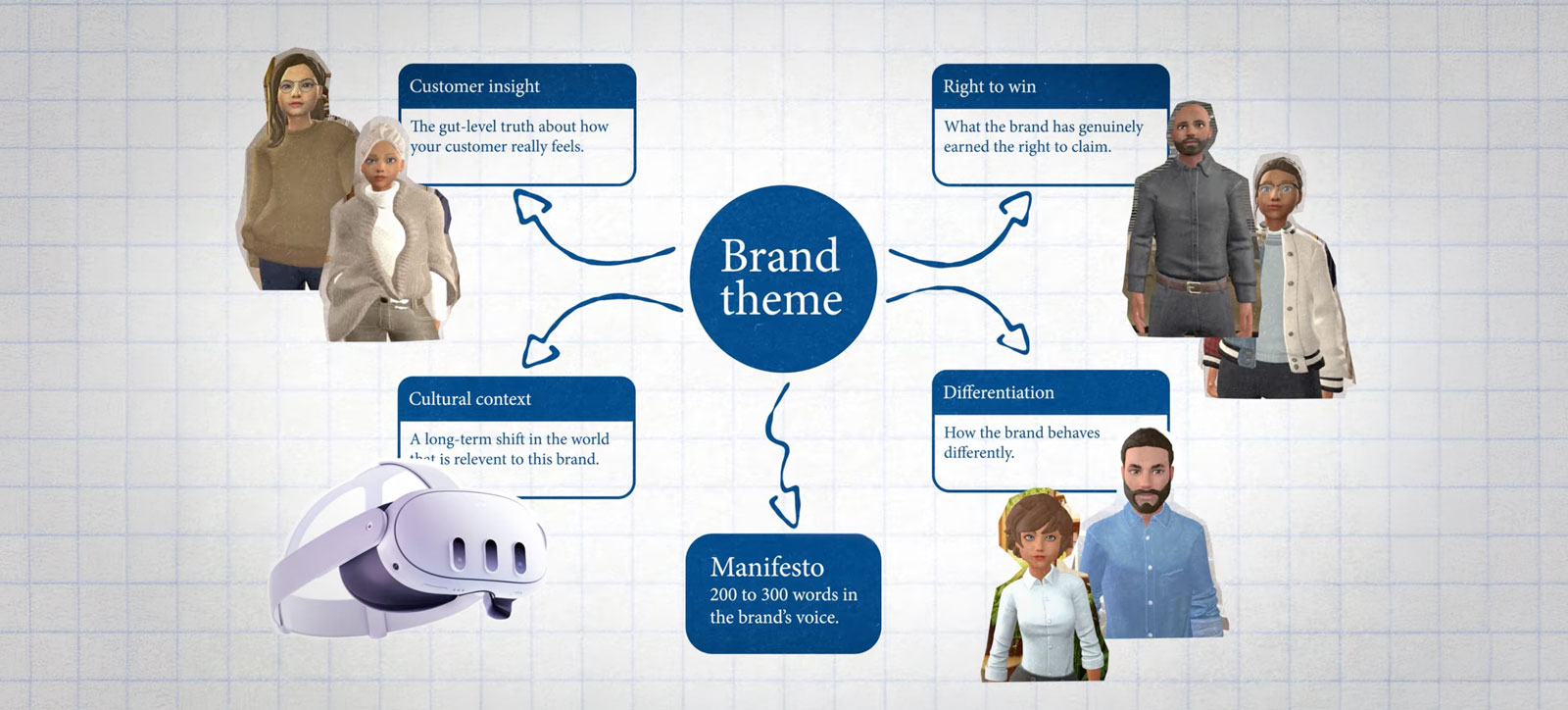
Working in teams, they move through the Four Levers framework created by Daryl Fielding, which she lays out in her book, The Brand Book. Ms Fielding created the framework over the course of an illustrious career spanning the creation of the original Dove Real Beauty campaign as Managing Director at Oglivy to being Director of Brand Marketing at Vodafone.
Students interact with 31 AI avatars built by the School’s Teaching and Learning Enhancement department as they conduct research, analyse evidence and ultimately defend their strategic recommendations.
The avatars include customers, competitors, managers, directors, and more, with a virtual company board interrogating the students' recommendations.
"We built the avatars so that different groups receive different combinations of evidence," says Diana Stefanescu, Teaching and Learning Consultant, who led the avatar development. "That means their research diverges and so do their conclusions. The learning comes from understanding that strategy follows from research rather than from assertion. That is one of the hardest ideas to teach."
The avatar system was designed to mimic the realities of professional research. Students must learn how to ask better questions, identify weak evidence and defend interpretations that are often contested.
Every conversation is recorded, creating interview transcripts that allow teaching staff to identify where research is weak and intervene with targeted support.
"The technology changed what we could teach," says Professor Chamberlain. "We can see how students are conducting their research, where assumptions are being made and where skill gaps emerge. That allows us to mentor students through the process in much the same way a manager would in a professional environment."
Alongside the AI interviews, students gain immersive VR experiences that expose them to parts of the global fashion supply chain that would be inaccessible in a conventional classroom.
They move from a fashion show runway to a garment factory in Bangladesh and eventually to landfill sites in East Africa.
“The narrative arc of the VR site visits allowed students to move from desire and aspiration in the luxury fashion world, to the human perspective of the garment creation process, and then the realities of disposal,” says Professor Chamberlain.
“Students were immersed in the cultural context the company operates in, gaining insight into a range of sustainability issues they had to consider.”
With students working in teams, research responsibilities are divided among them, so nobody possesses the full picture, which is often what happens in the real world.
"Students have to report back, analyse and synthesise what they have learned into a position that the whole group can understand and defend,” says Ms Stefanescu.
“Although every group receives the same brief, teams reach very different conclusions because they are working from a different selection of avatars.”
Professor Chamberlain picks up the story. “One group concluded that consumer guilt surrounding fast fashion consumption was internal and built a strategy around absolving customers of responsibility,” she says.
“Another argued that the guilt was socially imposed and developed a strategy that deliberately avoided moralising.
She adds: "No real board would sit through presentations from eight different student groups. But with AI, every team can face the same level of challenge. They have to hold a position under scrutiny, which is exactly what strategists are expected to do in practice."
Real world brand strategy learning
Students used the feedback from board members to refine their brand strategy before bringing it to life. They defined the creative territory for the brand and made examples of marketing communications.
Following its initial rollout, WBS plans to adapt the model for its Executive MBA programme and is exploring how similar immersive experiences could support teaching across disciplines.
“Students love the module,” says Professor Chamberlain. “One said it changed how they will make decisions in the workforce, and another, on an internship at the time, used the module's approach to help the company find its brand voice.
“This is the bridge a leading business school promises: graduates who leave having done the work of a strategist, not having studied it.
“The dominant format in postgraduate business education asks students to analyse a decision already made, with the evidence chosen for them by the case writer.
“This module uses technology to bring them into the real world where much is unknown and nothing is done in hindsight.
“Instead, students conduct open-ended research with people who answer back, and the difficulty is in asking the right question, not in optimising against a model.”
Discover Warwick Business School’s Change Makers.
 X
X Facebook
 LinkedIn
 YouTube
 Instagram
 Tiktok