


Meat me halfway: Flagging how customer behaviour is changing could increase sales of plant-based products
Growing up as the son of restaurant owners close to Mannheim in the Rhine region of Germany fostered an interest in food that has informed my whole career.
Today, I am Managing Director of Revenue Management Solutions, a consulting firm that delivers consumer insights and behaviour analysis to restaurant chains.
So, when it came to choosing a subject for my Doctorate of Business Administration (DBA) thesis, it was inevitable that I would look at a challenge that the restaurant sector is facing.
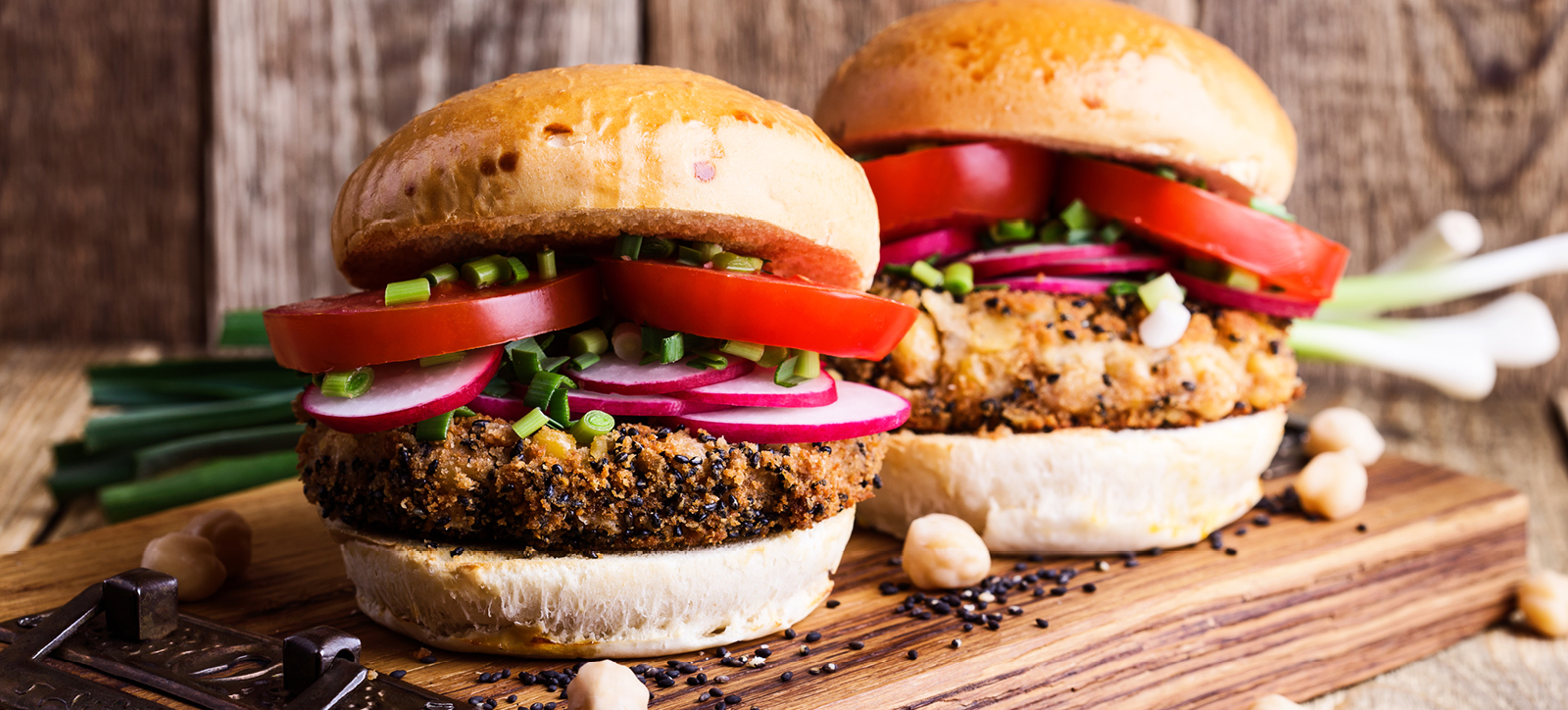
A few years ago, fast-food restaurants introduced plant-based foods on their menus in response to growing interest in alternatives to meat among consumers.
This interest came about because of increased concerns in society about the environmental impact of meat, including greenhouse gas emissions, deforestation and water use.
However, those concerns were not translating into sales. The question of how to boost take-up of plant-based foods was an important issue for the industry.
Can marketing boost sales of plant-based food?
My research explored the idea of using social norm nudges to help boost sales. I looked at three different types of social norm nudges – descriptive, injunctive and dynamic.
- Descriptive norms focus on telling customers about people’s actual behaviours, for example, “a lot of customers are buying plant-based meat”
- Injunctive norms address the unwritten rules of how to behave – what society approves and disapproves of, such as keeping quiet in a library. Or, in this context, “our customers would advise you to give plant-based products a try”
- The use of dynamic norms focuses on how consumers’ behaviour is changing, such as, “more and more people are buying plant-based products”.
I created two experiments, one online and the other in a real fast-food restaurant chain. The online experiment involved almost 900 people from eight different countries who were randomly allocated either to one of the social norm messages or a control group, and asked what they would buy.
I was interested in whether the impact of the messaging would differ in markets that were more individualistic – like the US, Australia and the UK – compared to those with a more ‘collectivist’ structure, such as China and Taiwan.
The study found that dynamic norms worked best, increasing the chances of customers choosing plant-based items by almost a fifth, with injunctive messages being the second-most effective.
This was the case regardless of the market involved, with the messaging working both in the more collectivist cultures in Asia and in Western countries that are more individualistic.
I also carried out a real-world field study with a German fast-food chain that involved more than 100,000 buying decisions.
This confirmed the results of the online experiment, with the use of dynamic social norm messaging being the most effective in lifting sales of plant-based products.
The reason for this could be that this type of messaging is more reflective of real life.
Why vegan food has fallen down the agenda
The field study also revealed that it is difficult to back up injunctive statements, such as the message that was used in the online study – that “customers who tasted our plant-based products would advise you to give them a try!” – with reliable evidence.
This makes them difficult to defend legally and reduces the applicability of this type of statement in the real world.
My thesis suggests that, if restaurants want their customers to adopt any other type of more sustainable behaviour, using dynamic norms messaging is the most effective method.
There is a certain irony in that, since I started my research, before COVID-19, the world has moved on and plant-based foods have fallen down the agenda of restaurant chains.
This is in large part because of the pandemic, which transformed the sector at a speed never seen before and has left it focused on a fight for survival.
Add in concerns about ultra-processed foods, the rise of weight-loss drugs such as Mounjaro, and the uncertain impact of climate change on the price and availability of both meat and plant-based crops, and the future for the plant-based sector is highly uncertain.
However, the environmental concerns about meat consumption are not going away, and there are already success stories – plant-based milks are thoroughly mainstream.
I was lucky enough to win an award for the best DBA thesis for this research, a testament that all the effort was complete and recognised.
When the tide turns, and interest in plant-based options returns, this research will help to inform how the fast-food sector can encourage customers to choose plant-based options.
Further reading:
Three ways to nudge customers to buy green products
Is there a better way to market local produce?
Can we be nudged to act on climate change?
Have big corporations nudged us in the wrong direction?
Philipp Laque is Managing Director for Revenue Management Solutions in Europe and the UK. He completed a Doctorate of Business Administration (DBA) at Warwick Business School, where he won the Best DBA Thesis Award.
Understand the science behind human decision-making to solve challenges within your organisation with the three-day Executive Education programme Behavioural Science in Practice at WBS London at The Shard.
Discover more about Behavioural Science, Marketing and Sustainability. Receive our Core Insights newsletter via email or LinkedIn.
 X
X Facebook
 LinkedIn
 YouTube
 Instagram
 Tiktok