



Perception is reality: A survey of 4,432 SME leaders across seven countries found that many won't implement net zero polices because they think peers won't either
SME leaders consistently underestimate how much their peers care about climate action and this "belief trap" is associated with lower adoption of sustainability practices and investments, according to new international research.
When policymakers discuss how to accelerate the transition to net zero, the conversation usually centres on finance, regulation and technology. For small and medium-sized enterprises (SMEs), those challenges are real. Rising costs, competing investment priorities and uncertainty over future policy can all influence decisions about sustainability.
But new research from Warwick Business School and the Enterprise Research Centre suggests there may be another, largely overlooked barrier: SME leaders systematically underestimate how much their peers care about climate action.
The study, published in Entrepreneurship Theory and Practice, surveyed 4,432 SME owners and leaders across seven countries and found that many hold an inaccurate perception of how seriously other firms take climate change.
That perception matters because the research found it is associated with whether businesses go on to adopt sustainability measures such as energy-efficiency improvements, renewable energy, operational changes and climate-friendly products and services.
A hidden barrier to climate action
The researchers describe the phenomenon as a "belief trap".
Business leaders were asked to rate the importance of climate action to their own organisation on a scale from zero to 10. On average, they gave a score of 5.69.
However, when asked how important they believed climate action was to other SME leaders, the average score fell to 5.21.
In other words, many leaders care more about climate action than they think their peers do.
The study found this pattern across multiple countries, with the largest perception gaps occurring in Italy, Ireland and Germany. Significant gaps were also identified in the UK and the US.
Why perceptions matter
Perhaps the most important finding is that these perceptions are linked to business behaviour.
Leaders who believed other business owners were more supportive of climate action were more likely to introduce sustainability practices and investments within their own organisations.
The influence of these perceptions was greater than differences associated with several traditional business characteristics, including company age, whether premises were owned or rented, and whether a business was micro-sized or medium-sized.
The findings suggest that climate action among SMEs is shaped not only by economics and regulation, but also by social norms and assumptions about what other business leaders value.
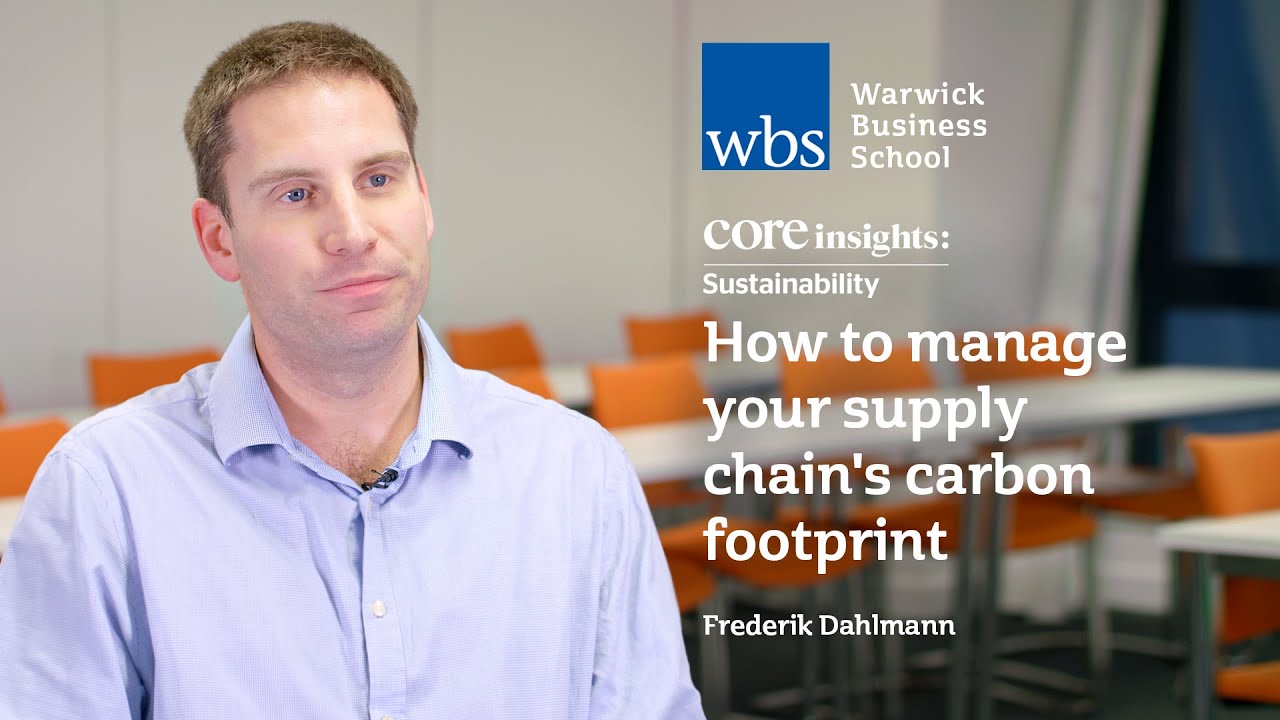
Fred Dahlmann, Associate Professor of Strategy and Sustainability, said: "Many SME leaders may be misreading the room. They care about climate action, but they assume other business owners care less than they actually do.
"Our findings suggest that these perceptions matter because what leaders think their peers believe is associated with the actions they take in their own businesses.
"You cannot fix a psychological barrier with a grant scheme alone. If business leaders think nobody else cares, many will hold back. Creating opportunities for SME leaders to learn from each other may be just as important as providing financial support."
The study also raises questions about the way support for SMEs is designed.
Financial support remains important, and the research does not suggest otherwise. However, concerns about the cost of climate action were associated with leaders' intentions rather than the number of sustainability measures already in place.
By contrast, perceptions of peer support were closely linked to the actions businesses’ had actually taken.
That finding suggests financial incentives alone may not be enough to overcome every barrier to climate action.
As world leaders gather at COP31 to discuss the estimated $1.1 trillion needed annually for global climate finance, the research highlights the potential importance of psychological and social factors alongside financial support.
The power of peer networks
The research also identifies a practical route forward.
SME leaders who interacted more frequently with other business owners had more accurate perceptions of their peers' attitudes towards climate action. They were also more likely to have implemented sustainability measures themselves.
The findings point to a potentially important role for business associations, chambers of commerce, enterprise agencies and professional networks in helping firms learn from one another.
Creating opportunities for business leaders to share experiences, discuss challenges and learn about successful sustainability initiatives could help overcome misconceptions that may be holding some firms back.
Stephen Roper, Professor of Enterprise and Director of the Enterprise Research Centre, said: "Small businesses account for the overwhelming majority of firms and a significant share of emissions, so understanding what drives action is critically important.
"As policymakers look for ways to support the net zero transition, our findings suggest there is value in looking beyond traditional financial and regulatory approaches. Peer networks, business communities and opportunities for leaders to learn from one another could be a low-cost but highly effective way of accelerating climate action among SMEs."
Rethinking the path to net zero
SMEs account for roughly half of UK business emissions and make up the vast majority of firms in the economy. For policymakers, lenders and business advisers, encouraging greater climate action among smaller firms is therefore an important part of meeting net zero goals.
The research suggests achieving that goal may require more than grants, incentives and regulation. It may also depend on ensuring that business leaders have a more accurate understanding of what their peers think and do.
If SME leaders are systematically underestimating their peers' willingness to act, an important way to accelerate climate action may be helping businesses recognise they are not acting alone.
- This article is based on the peer-reviewed research paper Lees, J., Constantino, S. M., Cushen, J., Dahlmann, F., de Bakker, F. G. A., Della Torre, E., Frigotto, M. L., Hackenbuchner, M., Heuvinck, N., Kypraios, E., Ri, A., Roper, S., Schuessler, E., Ungemach, C., & Etzion, D. (2026). Belief Traps Hinder Small Business Climate Action. Entrepreneurship Theory and Practice. https://doi.org/10.1177/10422587261485958
Further reading:
UK ambition is booming but small firm innovation sinks to four-year low
Three ways to nudge customers to buy green products
Can we be nudged to act on climate change?
Fred Dahlmann is Associate Professor of Strategy and Sustainability and teaches Business & Sustainability on the Global Online MBA and Executive MBA.
Stephen Roper is Professor of Enterprise and Director of the Enterprise Research Centre.
Discover more insights on Sustainability. Receive our Core Insights newsletter via email or LinkedIn.
Choose Warwick Business School as a preferred source of trusted insights in your Google searches.
 X
 Facebook
 LinkedIn
 YouTube
 Instagram
 Tiktok