


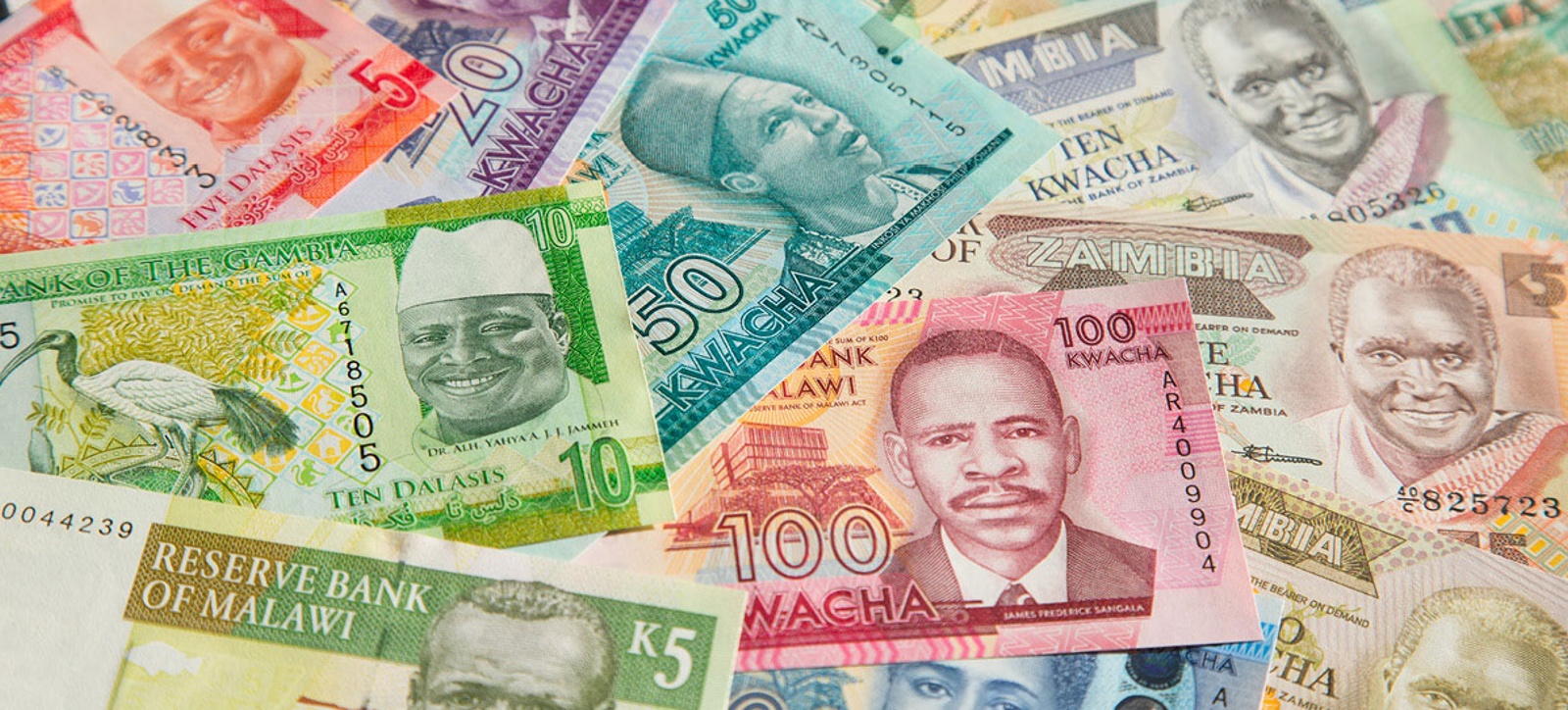
Encouraging: Inflation targeting is not a magic formula reserved for rich economies. It can work in Africa too
Central banks worldwide have faced strong headwinds in keeping inflation in check in recent years. They have been hit by a series of inflationary shocks: the after-effects of the pandemic, war in Ukraine and the commodity price spikes that followed, and more recently from the war in the Persian Gulf.
Government debt, already high and climbing in many countries, has risen further. This has been a particular problem in sub-Saharan Africa, where annual inflation doubled from 10 per cent in 2019 to a peak of more than 20 per cent in 2024.
Against this backdrop, a growing number of African central banks are asking whether it is time to adopt formal inflation targeting — often with encouragement from the International Monetary Fund (IMF).
It is a bigger step than it might sound. Most African countries currently either manage their exchange rate or target the growth of money in the economy.
Of the 54 countries on the continent that are recognised by the United Nations, only five — Ghana, Kenya, Mauritius, South Africa, and Uganda — have a formal inflation target, and just three of those let their currency float freely.
Therefore, this is a live and consequential question, not just an academic one.
Why inflation targeting works
The basic idea of inflation targeting is simple: a central bank commits publicly to keeping inflation at, or close to, a specific rate or within a range. It achieves this by adjusting interest rates and/or the growth in the money supply.
The theory behind this is worth unpacking, because it explains why the approach can be so powerful — and how it can go wrong.
Everything hinges on credibility. If households, businesses, and workers believe the central bank will hit its target, they set their prices and wages accordingly and inflation expectations stay anchored near the target. That, in turn, makes the central bank's job easier, because it needs to move interest rates by less to keep inflation under control – just enough to offset autonomous shocks.
If credibility is weak, the opposite happens: expectations drift with whatever inflation is right now, shocks get amplified, and the central bank has to raise interest rates further and for longer to bring inflation back under control. And that happens for both upwards and downwards inflationary pressures.
This is why so much of the practical work of inflation targeting is about building and protecting credibility, not just fine-tuning interest rates from month to month.
Countries that respond early and proportionately with monetary policy in response to inflationary pressure generally find it far less costly than those that hesitate and then have to catch up later with a larger, more disruptive tightening.
Credibility also determines how a central bank should respond to different types of shock. A shock that increases demand — an unsustainable spending boom say — raises both output and prices and normally calls for higher interest rates.
But a shock that reduces supply, such as a spike in the global oil or food price, is more complicated: since it pushes prices up but output down, textbook practice is often to look through the shock, tolerating a temporary rise in inflation on the assumption that it will dissipate naturally.
How to avoid the exchange rate trap
The challenge is that supply shocks — commodity prices especially — are exactly the kind of shock African economies are most exposed to, since food and energy make up a much larger share of household budgets than they do in richer countries. And a sequence of shocks in the same direction can undermine credibility if totally ignored.
One of the clearest — and most counterintuitive — messages from economic theory is about the exchange rate trap. It is tempting for policymakers to see a depreciating currency as the cause of inflation and to try to defend it directly through intervention.
However, a depreciating exchange rate is usually a symptom of some other shock — loose monetary policy, an unsustainable fiscal deficit, a genuine deterioration in the terms of trade, or even a shock to the other currency — rather than being the root cause of domestic inflationary pressure.
Trying to prop up the currency without addressing the cause rarely works and can leave a country with an unbalanced economy that is more, not less, vulnerable to a crisis.
The better approach is to diagnose why the exchange rate is moving, address the true source of the pressure, and let the exchange rate find its own level. Stable prices should engender a stable exchange rate.
A fixed exchange rate regime can also work – but only if monetary policy and fiscal policy are adjusted so as to preserve the fixed rate, which can be much harder than it sounds.
Three challenges facing African central banks
While the underlying economics of inflation targeting is much the same everywhere, three issues make it particularly challenging for many African central banks.
The first is choosing the right target. Because faster-growing, developing economies typically see their services and other non-traded prices rise faster than in richer countries — even when import prices are stable — it is reasonable for African inflation targets to sit somewhat higher than the two to 2.5 per cent common among developed economies.
In practice, the more successful African inflation targeters have historically settled on targets in the three to six per cent range. South Africa had such a target range for almost a quarter of a century, but towards the end of 2025 it made a bold move to reduce its central target for 2026 to three per cent.
Whatever level is chosen, it needs to be one the central bank can credibly stick to; constantly moving the goalposts risks undermining the entire framework.
The second, and probably the biggest, challenge is fiscal dominance — the risk that the central bank's objectives get overridden by government financing needs. Many African governments face genuine pressure to spend on development and welfare but operate with a narrow tax base and limited access to affordable borrowing.
Historically, that combination has often tempted governments to lean on the central bank to print money or buy government debt cheaply — resulting in an 'inflation tax' that is rarely fair nor sustainable. A credible inflation-targeting regime requires real central bank independence, in law and in practice, including hard restrictions on central bank financing of the government.
The third challenge is a weaker transmission mechanism of monetary policy. In many African economies, financial markets are less developed, a larger share of bank credit goes to government rather than to business, and interest rate changes therefore have less traction on spending and prices than in developed economies.
This is a genuine handicap, but not a fatal one: credibility, clear communication and decisive action can still anchor expectations even where the interest rate channel itself is weak.
Central banks can also work over time to deepen their domestic financial markets, strengthening the transmission mechanism as they go. One should also note that the monetary transmission mechanism in developed countries can also be weak in the absence of a credible monetary regime.
Making inflation targeting work
Getting the framework right on paper is only the start. Central banks that succeed with inflation targeting tend to share some common features.
Decisions are typically made by a Monetary Policy Committee rather than a single individual, which builds confidence that policy isn't arbitrary or overly influenced by any one person's views. Some countries strengthen this further by including independent external members alongside central bank staff.
Communication can matter just as much as the decisions themselves. Central banks need to explain, clearly and consistently, what they are trying to achieve, how they read the current economic situation, and how policy would respond to future developments — tailoring the message for audiences ranging from financial markets to the general public.
And when the target is missed, the central bank needs to be able to explain why, and what it is doing about it. That kind of transparency and accountability is what ultimately sustains public trust in the target — and trust, more than any technical detail, is what makes inflation targeting work.
None of this is easy, and the evidence bears that out: some African inflation targeters, like Kenya and South Africa, have brought inflation back close to target since the pandemic; others, where fiscal pressures have dominated, have struggled.
Yet the overall lesson is an encouraging one. Inflation targeting is not a magic formula reserved for rich, sophisticated economies. It can work in Africa too, provided the target is set at a credible level, the central bank is genuinely independent of short-term fiscal pressure, and policymakers commit to clear, honest communication.
Get those three things right, and a weaker transmission mechanism becomes a manageable handicap rather than a fatal flaw.
- This article is based on the Bank of England paper Inflation targeting: considerations for central banks in Africa.
Further reading:
Trump vs the Fed: Why central bank independence matters
Should the Bank of England have a dual mandate?
How big should the central bank balance sheet be?
Six climate change policies for central banks
Paul Fisher is a consultant adviser at the Bank of England Centre for Central Banking Studies, a former member of the Bank of England's Monetary Policy Committee and an Honorary Professor at Warwick Business School. He teaches on the Global Central Banking and Financial Regulation qualifications.
Glenn Hoggarth is a senior adviser at the Centre for Central Banking Studies.
Discover more about banking and finance. Receive our Core Insights newsletter via email or LinkedIn.
Choose Warwick Business School as a preferred source of trusted insights in your Google searches.
 X
X Facebook
 LinkedIn
 YouTube
 Instagram
 Tiktok