


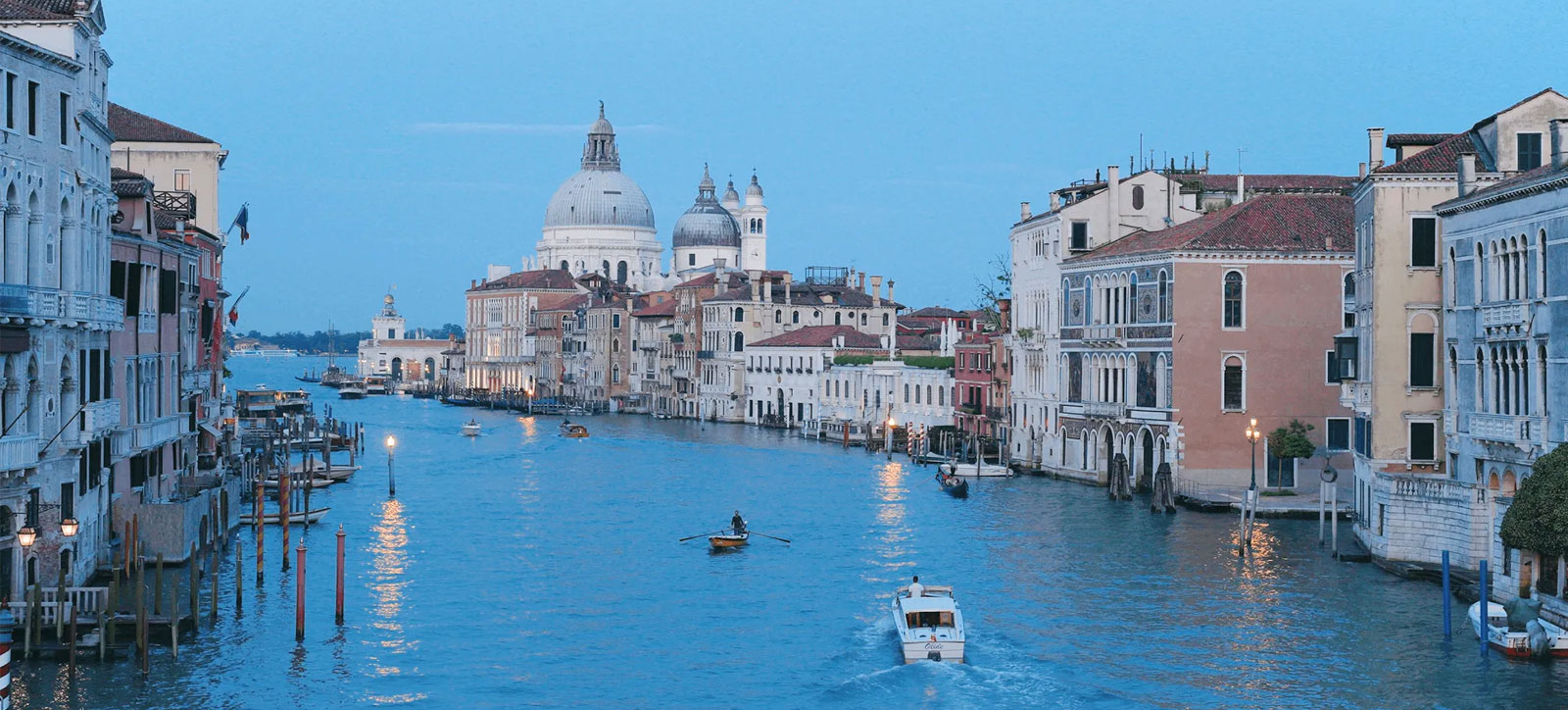
City as classroom: Art as a form of business has a long, established history in Venice
Long before London and New York emerged as global art capitals, Venice was the shining citadel of culture and commerce. For centuries, merchants, artists, collectors and patrons converged on its glittering canal banks, creating one of the world’s earliest international markets for art.
Now, drawing on that history and its own academic presence in the city, Warwick Business School and the University of Warwick’s History of Art Department have launched a new Master’s degree that aims to explore how creativity, culture and business continue to shape one another in the modern economy.
The New MSc Business with Art, which starts in September 2027, combines business education with the study of art, design and visual culture. Students will split their learning between the University of Warwick and Warwick Business School’s London base at The Shard, with an opportunity to study at the Warwick Venice Centre during the Biennale, the Italian city's world-famous cultural exhibition.
Its creators say the programme is designed not simply for those seeking careers in galleries or auction houses, but for students who want to understand how culture influences everything from branding and innovation to advertising, entrepreneurship and venture capitalism.
This is due in large part to the degree sitting mainly in Warwick Business School but developed jointly with the History of Art department, in contrast to many other art business programmes being offered by art schools or humanities departments.
“It’s an unconventional marriage but an extremely powerful one,” says Joshua Fullard, Associate Professor of Behavioural Science at WBS and Co-Director of the MSc Business with Art. “It’s the combination of an elite business school education with the important elements of art history and visual culture that makes it unique.”
Fundamentals of economic behaviour
On the business side of things, students will study financial reporting and accounting, strategy and quantitative methods. They will also look at the fundamentals of economic behaviour, which will include, according to Dr Fullard, that “pushback from behavioural economists who have said, well, actually in real life, people are a little bit funky and they will behave in different ways”.
Those different ways will be on full display in a core module being held at WBS London at The Shard.
“The Art and Design in Practice at the Shard module is looking at the practice of the cultural industries,” says Naomi Vogt, Associate Professor in the History of Art and Co-Director of the programme. “We will be inviting curators, or people who work in art publishing or in design and film to share their experiences with students.
“It’s about sharing the more disruptive, sometimes oppositional cultures of the art market with students, and then seeing how they can apply them to business strategies.
“It’s not just about Renaissance paintings on walls.”
Historical centre of cultural exchange
Nevertheless, Venice and the great Italian Renaissance do provide significant inspiration for the course. Students will be able to study at the Warwick Venice Centre housed in a 17th century palazzo on the Grand Canal, while engaging directly with the city’s museums, galleries and cultural institutions.
According to Marta Ajmar, Associate Professor in the History of Art and Co-Director of the programme, Venice remains one of the best places in the world to understand the historic relationship between art and commerce.
“The city was a historical centre of cultural exchange and a place where many of the foundations of the art market were established,” she says. “Art as a form of business has a long, established history in Venice.”
The history forms the basis of an immersive teaching model – From Byzantium to the Biennale – that treats the city itself as a classroom.
“A lot of what we do is immersive learning,” says Dr Ajmar. “We travel across the city and explore this history in spatial terms, pinpointing locations where art and business connected.”

Students will also have opportunities to engage with the Venice Biennale, one of the world’s most influential cultural events.
“You can be walking around one of the islands in the Venetian lagoon and looking at architecture left untouched since the 14th century and then be at the Biennale engaging with art so recent that nobody has had time to write about it yet,” adds Dr Vogt.
It is all part of the wide-ranging nature of a programme that is multi-centred and multi-disciplined, according to Dr Fullard. “The beauty of the programme is that it is highly customisable,” he says.
This includes a variety of elective modules which include more business options such as consulting, design thinking and the role of artificial intelligence in business, and capstone options which include a research project or applying new-found skills and knowledge in the Business in Practice module.
Other modules that were custom-designed for this new course address subjects including the ethics and politics of visual culture, disruptive economics, and a global take on the links between art and the market in historical context.
Find out more about the MSc Business with Art.
Discover Warwick Business School's Change Makers.
 X
 Facebook
 LinkedIn
 YouTube
 Instagram
 Tiktok